
 EN
EN
When selecting containers for chemical storage, pharmaceutical applications, or industrial packaging, durability stands as a critical performance criterion. Among various plastic materials available in the market, HDPE bottles have established themselves as the superior choice for applications demanding exceptional resilience and long-term reliability. Understanding the scientific foundations and practical advantages that make HDPE bottles more durable than alternative plastic options enables procurement professionals and quality engineers to make informed decisions that directly impact product safety, operational efficiency, and cost effectiveness.
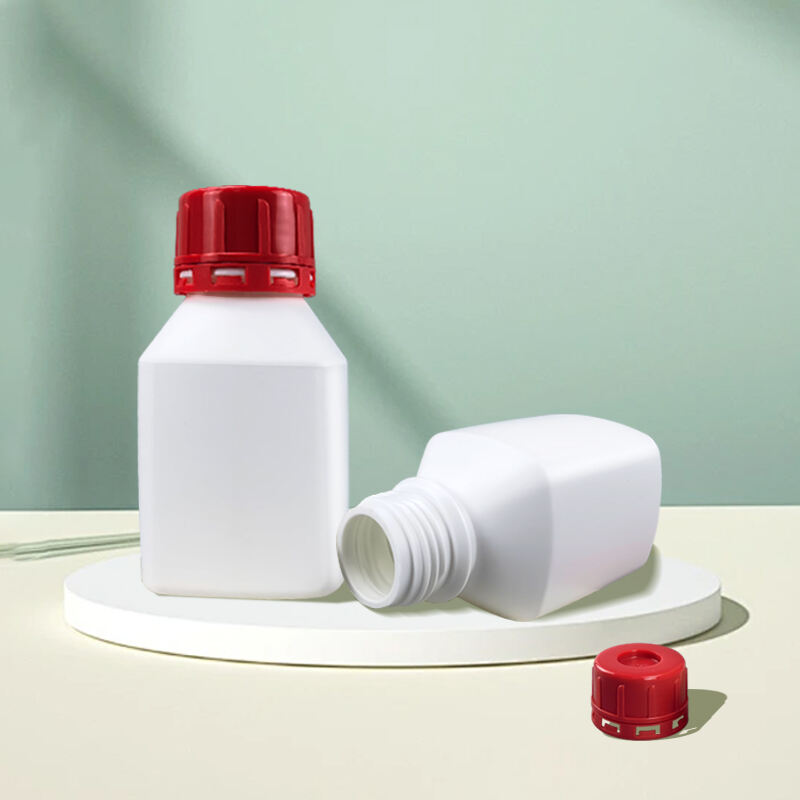
The remarkable durability of HDPE bottles stems from a combination of molecular architecture, material properties, and manufacturing characteristics that distinguish high-density polyethylene from other plastic polymers. While alternatives such as PET, LDPE, polypropylene, and PVC serve specific purposes in packaging industries, they lack the comprehensive durability profile that HDPE bottles deliver across multiple stress factors including impact resistance, chemical compatibility, environmental stability, and mechanical strength. This inherent superiority makes HDPE bottles the preferred solution for applications where container integrity cannot be compromised, from laboratory reagent storage to industrial chemical distribution.
Molecular Structure Advantages That Define HDPE Durability
High-Density Crystalline Architecture
The exceptional durability of HDPE bottles originates at the molecular level, where the polymer chains arrange themselves in a highly organized crystalline structure. Unlike low-density polyethylene or other amorphous plastics, HDPE features minimal branching in its polymer chains, allowing them to pack tightly together in a dense configuration. This crystalline arrangement creates a material with superior intermolecular forces, resulting in enhanced tensile strength and resistance to deformation under stress. The density of HDPE typically ranges from 0.941 to 0.965 grams per cubic centimeter, significantly higher than LDPE which measures between 0.910 and 0.940 grams per cubic centimeter.
This tight molecular packing directly translates to practical durability advantages in HDPE bottles. The crystalline regions act as physical crosslinks that anchor the polymer structure, preventing chain slippage when the material experiences mechanical stress. When an HDPE bottle encounters impact forces during handling or transportation, these crystalline domains distribute the energy throughout the material matrix rather than concentrating stress at failure points. This molecular architecture explains why HDPE bottles can withstand repeated drops, impacts, and compression forces that would crack or rupture containers made from less organized polymer structures.
Polymer Chain Length and Molecular Weight Distribution
The durability profile of HDPE bottles also benefits from the optimal molecular weight distribution characteristic of high-density polyethylene resins. HDPE polymers used in bottle manufacturing typically feature average molecular weights ranging from 50,000 to 250,000 daltons, with a relatively narrow distribution around this average. This controlled molecular weight profile ensures consistent material properties throughout the bottle structure, eliminating weak zones that might develop in materials with irregular chain length distributions. Longer polymer chains create more entanglement points, which function as additional reinforcement mechanisms that resist crack propagation.
When comparing HDPE bottles to alternatives like PET containers, the difference in polymer chain flexibility becomes apparent. While PET offers excellent clarity and barrier properties, its rigid aromatic ring structures make it more brittle under impact compared to the flexible aliphatic chains in HDPE bottles. The combination of high molecular weight and chain flexibility allows HDPE bottles to absorb impact energy through localized deformation without fracturing, a property particularly valuable in industrial environments where containers face rough handling. This molecular characteristic ensures that HDPE bottles maintain structural integrity even when subjected to stresses that would compromise other plastic options.
Superior Impact Resistance Across Operating Conditions
Cold Temperature Performance
One of the most significant durability advantages of HDPE bottles manifests in their remarkable impact resistance at low temperatures, where many alternative plastics become brittle and prone to failure. HDPE bottles maintain their toughness and flexibility even at temperatures as low as negative 40 degrees Celsius, making them suitable for cold storage applications, refrigerated transportation, and outdoor use in winter conditions. This cold temperature resilience stems from the semi-crystalline nature of HDPE, where amorphous regions between crystalline domains retain sufficient molecular mobility to absorb impact energy even when cooled.
In contrast, materials like rigid PVC and standard polystyrene exhibit glass transition temperatures well above freezing, meaning they transform into brittle, glass-like states in cold environments. Laboratory testing consistently demonstrates that HDPE bottles resist shattering when dropped on hard surfaces at sub-zero temperatures, while competing plastic containers frequently crack or fracture under identical conditions. This cold temperature durability makes HDPE bottles essential for pharmaceutical cold chain logistics, frozen reagent storage, and industrial applications in climate-controlled or outdoor environments where temperature fluctuations are unavoidable.
Repetitive Impact and Fatigue Resistance
Beyond single-impact resistance, HDPE bottles demonstrate superior durability when subjected to repetitive stress cycles that characterize real-world usage patterns. In manufacturing facilities, distribution centers, and laboratory settings, containers experience countless minor impacts, vibrations, and handling stresses throughout their service life. The fatigue resistance of HDPE bottles ensures that these accumulated micro-stresses do not compromise container integrity over time. The material's ability to dissipate stress energy without accumulating permanent damage allows HDPE bottles to maintain their structural properties through extended use cycles.
This fatigue resistance distinguishes HDPE bottles from alternatives like polypropylene, which, despite having higher tensile strength, can develop stress cracks more readily under cyclic loading. The combination of crystalline reinforcement and amorphous flexibility in HDPE bottles creates a material that recovers elastically from deformation rather than accumulating irreversible damage. Industrial testing protocols involving repetitive drop tests, vibration exposure, and compression cycles consistently show that HDPE bottles outlast competing materials, providing extended service life and reduced replacement costs in demanding applications.
Chemical Resistance and Environmental Stability
Broad Chemical Compatibility Spectrum
The durability of HDPE bottles extends beyond mechanical properties to encompass exceptional chemical resistance that preserves container integrity when storing aggressive substances. HDPE bottles exhibit compatibility with a wide range of chemicals including acids, bases, alcohols, and many organic solvents that would degrade or permeate other plastic materials. This chemical inertness results from the non-polar, saturated hydrocarbon structure of polyethylene, which lacks reactive functional groups that chemicals might attack. The absence of ester linkages, which make PET susceptible to hydrolysis, or chlorine atoms, which make PVC vulnerable to certain solvents, gives HDPE bottles superior resistance to chemical degradation.
In practical applications, this chemical resistance directly translates to container durability and safety. HDPE bottles storing laboratory reagents, industrial chemicals, or pharmaceutical formulations maintain their structural integrity without swelling, softening, or developing stress cracks even after prolonged contact with challenging substances. While no single material offers universal chemical resistance, HDPE bottles provide compatibility with a broader range of chemicals than most alternative plastics, reducing the need for multiple container types in diverse storage applications. This versatility, combined with mechanical durability, makes HDPE bottles the default choice for chemical packaging across industries.
UV Resistance and Outdoor Weathering Performance
Environmental durability represents another dimension where HDPE bottles outperform many plastic alternatives, particularly regarding resistance to ultraviolet radiation and outdoor weathering conditions. While unmodified HDPE does absorb some UV energy, modern HDPE bottle formulations incorporate UV stabilizers and carbon black pigmentation that dramatically enhance resistance to photodegradation. These additives function by absorbing harmful UV wavelengths before they can break polymer chains, or by quenching free radicals that initiate degradation reactions. As a result, properly formulated HDPE bottles can withstand years of outdoor exposure without significant loss of mechanical properties.
This weathering resistance proves critical for applications involving outdoor storage, agricultural chemical containers, and industrial applications where bottles may experience direct sunlight exposure. Materials like polypropylene, despite excellent chemical resistance, degrade more rapidly under UV exposure without stabilization, becoming brittle and prone to cracking. PET bottles, while offering good clarity, also suffer UV-induced degradation that manifests as yellowing and mechanical property loss. The combination of inherent stability and effective additive packages allows HDPE bottles to maintain durability in outdoor and high-UV environments where alternative plastics would require more frequent replacement, offering both performance advantages and lifecycle cost benefits.
Manufacturing Process Contributions to Durability
Blow Molding Process Optimization
The manufacturing methods used to produce HDPE bottles significantly contribute to their exceptional durability characteristics. Blow molding processes, particularly extrusion blow molding and injection stretch blow molding, create uniform wall thickness distribution and consistent material properties throughout the bottle structure. During blow molding, the HDPE resin undergoes controlled heating and inflation that orients polymer chains in directions that enhance strength, particularly in stress-bearing areas like corners and threads. This processing-induced molecular orientation creates additional reinforcement beyond the inherent material properties of HDPE.
The thermal history experienced during HDPE bottle manufacturing also influences crystallinity and morphology in ways that optimize durability. Controlled cooling rates allow crystalline regions to develop optimal size and distribution, balancing stiffness with impact resistance. Unlike thermoforming processes that might create weak points at sharp bends, or injection molding that can introduce weld lines, blow molding produces HDPE bottles with seamless construction and continuous material structure. This manufacturing advantage eliminates potential failure initiation sites, ensuring that durability remains consistent across the entire container rather than being compromised by process-induced defects.
Material Grade Selection and Quality Control
The durability of HDPE bottles also reflects careful material grade selection tailored to specific application requirements. HDPE resins are available in various grades differentiated by molecular weight, density, and melt flow characteristics, each optimized for particular performance attributes. Bottle manufacturers select specific HDPE grades that balance processing efficiency with end-use durability requirements, often choosing higher molecular weight resins for applications demanding maximum impact resistance or lower density grades when flexibility takes priority over absolute stiffness.
Quality control measures throughout the manufacturing process ensure that HDPE bottles consistently deliver expected durability performance. Raw material testing verifies that incoming HDPE resin meets specifications for molecular weight, density, and additive content. In-process monitoring controls critical parameters like melt temperature, blow pressure, and cooling rate that influence final bottle properties. Finished product testing validates that completed HDPE bottles meet mechanical performance standards for burst pressure, drop impact resistance, and dimensional accuracy. This comprehensive quality framework, combined with the inherent advantages of HDPE material, produces bottles that reliably outperform alternative plastic options in durability-critical applications.
Practical Performance Advantages in Industrial Applications
Extended Service Life and Reduced Replacement Costs
The superior durability of HDPE bottles translates directly into economic advantages through extended service life and reduced container replacement frequency. In industrial settings where containers undergo daily handling, filling, and emptying cycles, the mechanical resilience of HDPE bottles prevents premature failure that would necessitate frequent replacements. Cost analysis across multiple industries demonstrates that despite potentially higher initial unit costs compared to some alternatives, HDPE bottles deliver lower total cost of ownership through reduced breakage rates, fewer product losses from container failure, and extended reuse cycles in refillable applications.
This durability advantage becomes particularly significant in applications involving hazardous or valuable contents where container failure carries severe consequences. Chemical manufacturers relying on HDPE bottles for reagent distribution avoid the safety risks and regulatory complications associated with container breaches during transportation or storage. Pharmaceutical operations benefit from reduced product waste and maintained sterility when HDPE bottles resist the physical stresses of automated filling lines and distribution networks. The reliability of HDPE bottles in these demanding applications justifies their selection based on risk mitigation and operational continuity considerations beyond simple material cost comparisons.
Regulatory Compliance and Safety Performance
The proven durability of HDPE bottles supports compliance with stringent regulatory requirements governing chemical storage, pharmaceutical packaging, and food contact applications. Regulatory agencies recognize HDPE as a safe, stable material suitable for contact with a wide range of substances, and the durability characteristics of HDPE bottles ensure that containers maintain their protective function throughout the product lifecycle. The resistance to stress cracking, chemical permeation, and mechanical failure that characterizes HDPE bottles provides the reliability necessary to meet FDA, DOT, and international packaging standards.
Safety performance in real-world conditions depends not only on initial material properties but also on maintaining those properties throughout extended use and challenging operating conditions. HDPE bottles demonstrate consistent performance across temperature ranges, chemical exposures, and mechanical stress levels that would compromise less durable alternatives. This reliability ensures that containers continue to protect contents, users, and the environment even when subjected to the unpredictable conditions of transportation, storage, and handling in diverse industrial settings. The documented safety record of HDPE bottles across decades of use in critical applications validates the practical significance of their superior durability characteristics.
FAQ
What makes HDPE bottles more impact-resistant than PET bottles?
HDPE bottles exhibit superior impact resistance compared to PET bottles due to fundamental differences in molecular structure and material properties. HDPE features flexible, aliphatic polymer chains with minimal branching that can absorb impact energy through localized deformation without fracturing. In contrast, PET contains rigid aromatic ring structures that provide excellent clarity and stiffness but create a more brittle material prone to cracking under impact. The semi-crystalline structure of HDPE, with amorphous regions between crystalline domains, allows the material to dissipate stress energy elastically, while PET's higher glass transition temperature and rigid molecular architecture concentrate stress at failure points. This structural difference means HDPE bottles maintain integrity when dropped or struck, particularly at lower temperatures where PET becomes increasingly brittle.
Can HDPE bottles withstand outdoor storage and UV exposure?
HDPE bottles formulated with appropriate UV stabilizers and pigmentation can withstand extended outdoor storage and UV exposure while maintaining their durability characteristics. Modern HDPE bottle formulations incorporate additives such as hindered amine light stabilizers and carbon black that absorb harmful UV wavelengths or neutralize free radicals before they can degrade the polymer chains. These protective mechanisms allow properly formulated HDPE bottles to resist photodegradation, preventing the embrittlement and cracking that would otherwise occur with prolonged sun exposure. While unprotected HDPE would degrade under intense UV radiation, stabilized formulations used in commercial HDPE bottles provide years of reliable outdoor service. This weathering resistance makes HDPE bottles suitable for applications involving outdoor chemical storage, agricultural products, and industrial uses where containers cannot be completely shielded from environmental exposure.
How does the chemical resistance of HDPE bottles compare to other plastics?
HDPE bottles offer broader chemical compatibility than most alternative plastic materials due to their non-polar, saturated hydrocarbon structure lacking reactive functional groups that aggressive chemicals might attack. HDPE resists degradation from acids, bases, alcohols, and many organic solvents that would damage materials like PVC, polystyrene, or even PET. The absence of ester linkages that make PET susceptible to hydrolysis, or chlorine atoms that make PVC vulnerable to certain solvents, gives HDPE bottles superior resistance to chemical attack. While polypropylene offers comparable or slightly better chemical resistance in some applications, HDPE bottles provide better impact resistance, particularly at lower temperatures. This combination of mechanical durability and chemical compatibility makes HDPE bottles the preferred choice for storing challenging substances across laboratory, industrial, and pharmaceutical applications where container integrity cannot be compromised by chemical interaction.
Why do HDPE bottles maintain durability at both high and low temperatures?
HDPE bottles maintain durability across wide temperature ranges due to their semi-crystalline polymer structure that balances stiffness with flexibility under varying thermal conditions. At low temperatures approaching negative 40 degrees Celsius, the amorphous regions between crystalline domains in HDPE retain sufficient molecular mobility to absorb impact energy, preventing the brittle failure common in materials like rigid PVC or polystyrene that undergo glass transitions at higher temperatures. At elevated temperatures up to approximately 120 degrees Celsius, HDPE bottles maintain structural integrity because the crystalline regions, which have melting points around 130 degrees Celsius, continue providing dimensional stability and load-bearing capacity. This thermal performance range exceeds that of LDPE, which softens at lower temperatures, and many other plastics that become too rigid in cold conditions or too soft in warm environments, making HDPE bottles suitable for applications involving temperature fluctuations or extreme thermal conditions.