
 EN
EN
In commercial kitchens, food service operations, and household settings alike, managing condiment usage efficiently presents a persistent challenge that directly impacts both cost control and customer satisfaction. Clear plastic sauce bottles have emerged as an indispensable tool for addressing this challenge, offering a practical solution that combines visibility, precision, and operational efficiency. The transparency of these containers fundamentally changes how users interact with condiments, creating a visual feedback loop that naturally encourages measured dispensing and reduces waste. Understanding why clear plastic sauce bottles help with portion control requires examining the intersection of human behavior, container design, and the practical demands of food service operations.
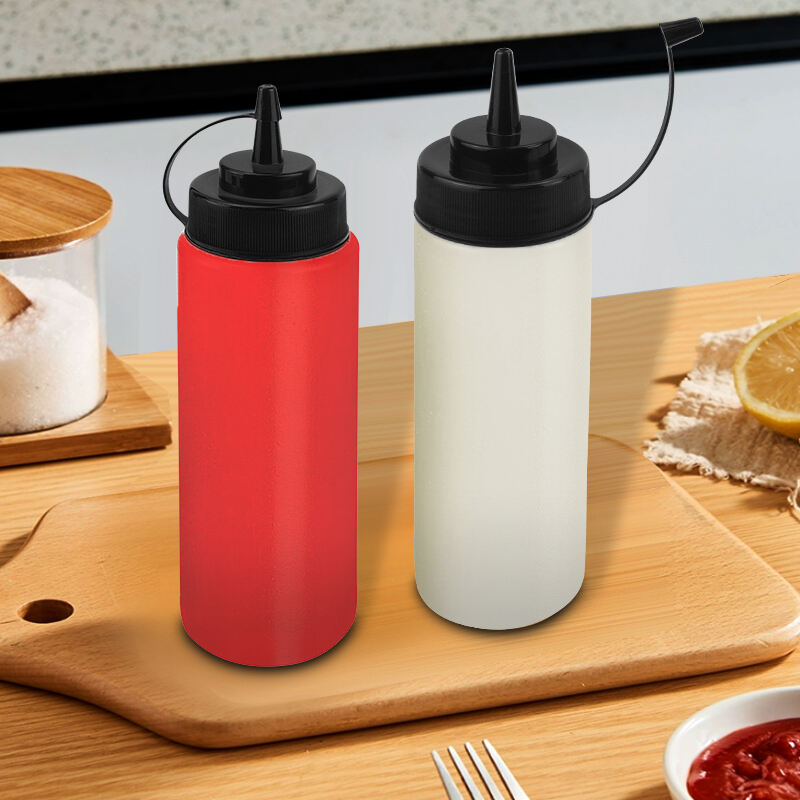
The ability to see exactly how much sauce remains and how much is being dispensed transforms the user experience from guesswork into informed decision-making. When restaurant staff, home cooks, or customers can observe the product level and flow rate in real time, they gain immediate control over dispensing amounts. This visual transparency addresses one of the fundamental problems with opaque containers: the tendency to over-dispense due to uncertainty about how much product is being released. The psychological impact of seeing sauce flow through clear plastic sauce bottles creates a natural stopping point, as users can visually confirm when they have applied an adequate amount rather than continuing to squeeze until they feel they have used enough. This behavioral modification happens automatically, without requiring conscious effort or additional training, making it an elegant solution to portion control challenges across diverse applications.
The Visual Psychology Behind Portion Control
How Transparency Influences Dispensing Behavior
The human brain processes visual information significantly faster than tactile feedback, making transparency a powerful tool for behavioral modification. When using clear plastic sauce bottles, users receive immediate visual confirmation of product flow, creating a feedback loop that naturally moderates dispensing behavior. This real-time visual data allows individuals to adjust their squeezing pressure and duration based on what they observe, rather than relying solely on feel or guesswork. Research in behavioral economics and consumer psychology consistently demonstrates that visibility influences consumption patterns, with transparent containers leading to more measured usage compared to opaque alternatives. The ability to see the product level before, during, and after dispensing creates multiple decision points where users can self-regulate their consumption.
The contrast between the sauce and the clear container material enhances visibility, making it easy to judge flow rates and quantities at a glance. This visual clarity proves particularly valuable in high-volume food service environments where staff members prepare multiple orders simultaneously and need quick visual references to maintain consistency. Clear plastic sauce bottles eliminate the need to physically weigh or measure condiments for routine applications, as experienced users develop an intuitive sense of appropriate portion sizes through repeated visual exposure. The transparency also reduces the cognitive load associated with dispensing tasks, allowing staff to focus on other aspects of food preparation while still maintaining portion accuracy. This effortless monitoring capability represents a significant advantage over systems that require deliberate measurement for each application.
Preventing Over-Application Through Visual Feedback
Over-application of sauces and condiments occurs most frequently when users cannot accurately gauge how much product they are dispensing. With opaque containers, individuals often continue squeezing beyond the necessary amount because they lack confidence that they have applied enough. Clear plastic sauce bottles address this uncertainty by providing constant visual confirmation, allowing users to stop dispensing as soon as they see an appropriate amount has been released. This immediate feedback mechanism proves especially effective with high-viscosity sauces that flow slowly, as users can observe the product accumulating on food rather than continuing to squeeze while waiting for product to appear. The visual connection between squeezing action and product flow creates a stronger sense of control and awareness.
The transparency of clear plastic sauce bottles also helps users recognize when bottles are running low, prompting timely refills that prevent the excessive squeezing that occurs when trying to extract the last portions from a nearly empty container. This awareness of product levels contributes to portion control by ensuring that dispensing remains consistent throughout the bottle's usage cycle. Users working with nearly empty bottles often apply excessive pressure in an attempt to extract remaining product, leading to sudden bursts of sauce when the blockage releases. By making product levels constantly visible, clear containers help users avoid this scenario entirely. The ability to anticipate when a bottle needs replacement ensures smooth workflow continuity while maintaining consistent portion control from the first use to the last.
Design Features That Enhance Measurement Accuracy
Nozzle Engineering and Flow Regulation
The effectiveness of clear plastic sauce bottles for portion control extends beyond transparency to include carefully engineered dispensing nozzles that regulate flow rates. Nozzle diameter, tip design, and opening configuration work together to control how quickly product exits the container, providing users with manageable flow rates that facilitate accurate portioning. Narrower nozzles slow product flow for thick sauces, giving users time to observe the dispensed amount and stop squeezing before over-application occurs. The relationship between nozzle design and container transparency creates a synergistic effect, as users can watch the product level drop within the bottle while simultaneously observing the sauce being applied to food. This dual visual feedback reinforces portion awareness and encourages conservative dispensing habits.
Many clear plastic sauce bottles incorporate precision-cut nozzles that produce consistent bead patterns or controlled streams, making it easier for users to apply uniform amounts across multiple applications. The predictability of flow patterns allows experienced users to develop muscle memory for specific portion sizes, further enhancing consistency. When combined with transparency, these engineered nozzles transform dispensing from an approximate process into a reliable, repeatable operation. The visual confirmation of flow characteristics helps users quickly identify any changes in product viscosity due to temperature variations or formulation differences, allowing them to adjust their dispensing technique accordingly. This adaptability ensures portion control remains consistent even when working with products that may vary slightly in thickness or flow properties.
Container Shape and Grip Ergonomics
The physical design of clear plastic sauce bottles contributes significantly to portion control through ergonomic features that promote controlled squeezing. Bottle shapes that fit comfortably in the hand allow users to apply gradual, measured pressure rather than forceful squeezing that leads to sudden product surges. Textured grip areas or contoured bottle bodies provide tactile feedback that helps users maintain consistent pressure throughout the dispensing action. The combination of ergonomic design and transparency means users can focus their attention on visual confirmation of portion size while the bottle's physical characteristics naturally guide appropriate squeezing technique. This integration of form and function reduces the learning curve for new users while helping experienced handlers maintain consistency across thousands of dispensing operations.
The flexible nature of the plastic material in these bottles provides important tactile feedback about how much pressure is being applied, creating a secondary control mechanism that complements visual monitoring. Users can feel the bottle walls compress and recover, developing an intuitive sense of the relationship between squeeze force and product flow. Clear plastic sauce bottles with appropriate wall thickness strike a balance between being easy to squeeze for continuous use while providing enough resistance to prevent accidental over-dispensing. This tactile dimension works in concert with visual transparency to create a multi-sensory control system that naturally promotes accurate portioning. The material's flexibility also allows users to maintain consistent flow by modulating pressure in response to what they observe, creating a dynamic feedback loop that adapts to different sauce viscosities and dispensing scenarios.
Operational Advantages in Commercial Settings
Staff Training and Consistency Standards
In commercial food service operations, maintaining consistent portion sizes across different staff members and service shifts represents a persistent management challenge. Clear plastic sauce bottles significantly simplify training for new employees by providing a visual reference that translates abstract portion guidelines into concrete, observable quantities. Trainers can demonstrate proper portion sizes while trainees watch the product flow through transparent containers, creating a clear mental image that transfers immediately to independent work. This visual learning approach proves more effective than verbal descriptions or written measurements, as it accounts for the actual appearance of different sauce volumes in practical application contexts. New staff members quickly internalize appropriate portion sizes through repeated visual exposure, reducing the training period and improving consistency from the outset.
The transparency of these containers also facilitates quality control monitoring, as supervisors can observe dispensing practices from a distance without interrupting workflow. This unobtrusive oversight helps identify training needs or inconsistencies before they become entrenched habits. Experienced staff members working with clear plastic sauce bottles develop highly consistent portioning techniques because they receive immediate visual confirmation that their current application matches their previous work. This self-reinforcing consistency proves particularly valuable in high-volume operations where maintaining uniform product quality across hundreds of orders daily determines customer satisfaction and operational profitability. The visual reference provided by transparency essentially creates an always-present standard that guides every dispensing action without requiring conscious measurement or external monitoring.
Inventory Management and Waste Reduction
Effective portion control directly impacts inventory management and operational costs, making clear plastic sauce bottles a valuable tool for financial efficiency. The transparency of these containers allows staff members to monitor sauce levels throughout service periods, enabling proactive refilling that prevents service interruptions while avoiding the wasteful practice of replacing partially filled bottles. This visibility extends to storage areas, where managers can quickly assess inventory levels without opening containers or maintaining separate tracking systems. The ability to see exactly how much product remains in each bottle supports accurate usage forecasting and purchasing decisions, reducing both excess inventory costs and the risk of running out of essential condiments during peak service periods. This operational visibility transforms sauce management from a reactive process into a proactive system.
The portion control benefits of clear plastic sauce bottles translate directly into reduced product waste and lower food costs. When staff members consistently apply appropriate sauce quantities rather than over-dispensing, product usage aligns more closely with planned portions and recipe specifications. This precision reduces the frequency of sauce purchases and minimizes the disposal of excess product that degrades before being used. In high-volume operations, even small improvements in portion accuracy compound into significant cost savings over time. The transparency of these bottles also helps identify inefficient dispensing practices or equipment problems that contribute to waste, such as nozzles that drip excessively or bottles that discharge product unevenly. By making these issues immediately visible, clear containers enable rapid corrective action that preserves product quality and controls costs throughout the operation.
Product Preservation and Quality Maintenance
Contamination Prevention Through Controlled Dispensing
The precision dispensing enabled by clear plastic sauce bottles contributes to product quality maintenance by minimizing contamination risks associated with over-handling or improper storage. When users can accurately dispense required portions without repeatedly opening and closing containers or using utensils to extract product, the sauce remains isolated from environmental contaminants and cross-contamination from other food items. The squeeze-bottle format combined with transparency creates a closed dispensing system where product flows directly from container to food without exposure to hands, utensils, or airborne contaminants. This hygienic advantage proves particularly important for sauces containing ingredients susceptible to bacterial growth or oxidation, as reduced exposure preserves product quality throughout the container's use cycle.
The visual monitoring capability of clear plastic sauce bottles also helps users identify quality issues such as separation, discoloration, or foreign material contamination before dispensing, protecting food safety and brand reputation. This early detection system prevents the serving of compromised product while allowing salvageable sauce to be used before quality degradation progresses. The transparency creates an automatic quality check at every use, essentially building food safety monitoring into routine operations without requiring additional procedures or equipment. For operations handling multiple sauce varieties, the ability to visually distinguish products through clear containers reduces the risk of accidentally using the wrong sauce, maintaining recipe integrity while preventing allergen cross-contamination incidents that could have serious health and liability consequences.
Extended Freshness Through Usage Monitoring
The visibility provided by clear plastic sauce bottles supports freshness management by enabling accurate tracking of product age and usage rates. Staff members can observe how quickly inventory turns over, identifying slow-moving products that may require rotation or disposal before quality deterioration occurs. This visual tracking complements formal date-labeling systems by providing continuous awareness of product status without requiring documentation review. The transparency makes it immediately obvious when bottles have been in service for extended periods, prompting timely replacement that maintains consistent product quality. For establishments managing multiple sauce varieties with different popularity levels, this visual inventory awareness ensures that all products remain fresh regardless of usage volume.
The portion control benefits of clear plastic sauce bottles indirectly extend product freshness by reducing the volume of sauce required in active service at any given time. When portioning accuracy improves, operations can maintain smaller working quantities while still meeting service demands, ensuring that product spends less time in potentially suboptimal storage conditions. This faster turnover naturally maintains higher quality standards while reducing waste from expired product. The combination of visual monitoring and accurate portioning creates a comprehensive freshness management system that requires minimal additional effort while delivering measurable quality improvements. These containers essentially make quality maintenance visible and actionable, transforming abstract freshness goals into concrete daily practices that preserve product integrity from packaging to service.
FAQ
How much cost savings can restaurants achieve by using clear plastic sauce bottles for portion control?
Restaurants typically reduce condiment costs by fifteen to twenty-five percent when implementing clear plastic sauce bottles with proper portion control training. The actual savings vary based on previous dispensing practices, sauce types, and service volume, but most operations see measurable reductions within the first month of use. High-volume establishments with significant condiment usage experience the most dramatic cost improvements, as even small per-portion reductions compound across thousands of daily applications. The transparency of these bottles helps staff visualize appropriate portions and self-correct over-dispensing habits without requiring constant supervision, making the cost benefits sustainable over time.
Do clear plastic sauce bottles work effectively with all types of sauces and condiments?
Clear plastic sauce bottles perform well with a wide range of condiments including ketchup, mustard, mayonnaise, hot sauce, barbecue sauce, salad dressings, and similar products with pourable to moderately thick consistencies. Very thick sauces or products with large particulates may require bottles with wider nozzles to prevent clogging, though transparency still provides portion control benefits. Extremely thin liquids may flow too quickly for precision control with standard nozzles, requiring specially designed tips that regulate flow rates. The key factor is matching the bottle's nozzle diameter and design to the sauce's viscosity, ensuring controllable flow that allows users to observe and regulate dispensing effectively through the transparent walls.
How does the transparency of clear plastic sauce bottles compare to measuring tools for portion accuracy?
Clear plastic sauce bottles provide visual approximation that proves sufficiently accurate for most food service applications while being significantly faster and more practical than formal measuring tools. For situations requiring precise measurements such as recipe development or nutrition analysis, graduated measuring tools offer superior accuracy. However, for routine service operations where consistency matters more than absolute precision, the visual reference of transparent bottles delivers appropriate accuracy with minimal time investment. Experienced staff develop reliable visual judgment that produces consistent portions within acceptable tolerance ranges, making clear bottles an effective compromise between the perfect accuracy of measurement tools and the speed requirements of commercial food service.
Can clear plastic sauce bottles help with health and nutrition goals by controlling calorie intake?
Clear plastic sauce bottles support nutrition management by making portion sizes visible, helping users avoid the excessive calorie consumption that occurs with uncontrolled condiment use. Many popular sauces contain significant calories from fats and sugars, making portion awareness important for health-conscious diners and weight management programs. The transparency of these bottles helps both food service staff and individual users apply measured amounts rather than unknowingly over-serving calorie-dense condiments. For operations focused on nutrition transparency or healthcare food service, clear bottles combined with staff training on appropriate portion sizes help deliver meals that meet nutritional specifications without requiring complex measurement procedures for every application.
Table of Contents
- The Visual Psychology Behind Portion Control
- Design Features That Enhance Measurement Accuracy
- Operational Advantages in Commercial Settings
- Product Preservation and Quality Maintenance
-
FAQ
- How much cost savings can restaurants achieve by using clear plastic sauce bottles for portion control?
- Do clear plastic sauce bottles work effectively with all types of sauces and condiments?
- How does the transparency of clear plastic sauce bottles compare to measuring tools for portion accuracy?
- Can clear plastic sauce bottles help with health and nutrition goals by controlling calorie intake?