
 EN
EN
A skincare formula can be excellent and still feel ordinary if the package fights the user. The pump sticks. The label lifts after a few humid days. A clear bottle turns cloudy, or the first press produces a sad little dribble. These are packaging details, but they shape how a customer judges the whole brand.
That is why a hand wash bottle should be developed as part of the product, not purchased or customed after the formula and branding are finished. For a brand, the difficult part is not finding an empty container. It is matching the formula, bottle shape, pump, artwork, refill plan, and production requirements so they work as one system.
This guide focuses on the choices that prevent leaks, awkward dispensing, and expensive redesigns after filling begins.
Start With the Formula, Not the Bottle Drawing
A bottle that looks perfect in a render may not suit the formula inside it. Sanitizing gels, creamy washes, pearlized soaps, exfoliating cleansers, and fragrance-rich products flow differently through a dip tube and create different expectations at the pump.
A useful custom brief covers formula viscosity, alcohol content, essential oils, suspended particles, filling temperature, shelf life, and target market. A serious supplier should ask for these details before recommending a resin or component. “What color would you like?” is necessary, but it should not be the first question.
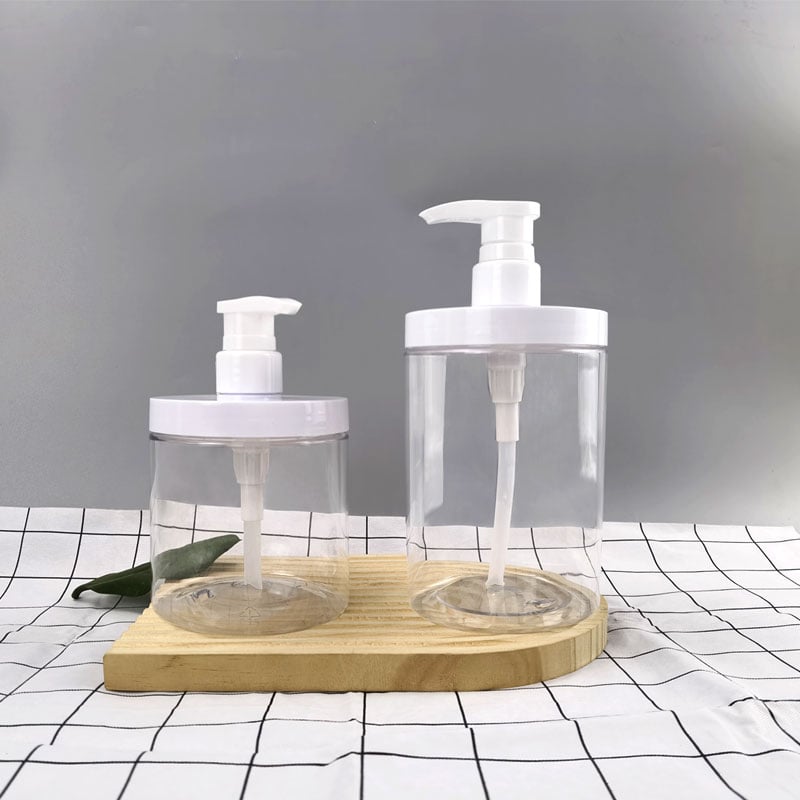
PET is often chosen when visual clarity is important, especially for tinted gels. HDPE may be a better starting point for an opaque look or formulas that need stronger chemical resistance. PP is commonly considered for closures and component parts. Material selection is not a slogan; it is a compatibility decision. A transparent hand wash bottle can make a formula look attractive, but it also makes bubbles, fill variation, and label alignment easier to notice.
Material Selection: Matching the Bottle to the Formula
Now let's talk about the bottle itself. The material you choose for your hand wash bottle affects everything from chemical compatibility to shelf appeal. The three main options for custom plastic hand wash bottles are PET, HDPE, and PETG.
PET is the go-to for transparent hand wash bottle designs. It offers glass-like clarity, which lets customers see the product inside—a big deal for brands selling colored gels, marbled formulations, or products with visible botanical extracts. PET is lightweight, impact-resistant, and handles most hand wash formulations without issue. The trade-off is that PET has limited compatibility with certain high-concentration fragrance oils, so testing is essential.
HDPE is the workhorse for opaque or translucent designs. When formulating anti-bacterial or heavy-duty liquid soaps, using HDPE for your hand wash bottle designs ensures superior chemical resistance and prevents wall paneling—the inward collapse that can happen when a bottle is squeezed repeatedly. HDPE is tougher than PET and better suited for larger formats like a 500ml hand wash bottle that will be refilled multiple times.
PETG is the premium alternative for brands that want visual impact without sacrificing durability. Glycol-modified PET produces a plastic that is noticeably clearer, more impact-resistant, and more chemically resistant than standard PET. That modification matters in practice: PETG doesn't shatter or crack under impact the way standard PET can, and it handles a broader range of cosmetic and fragrance formulas without crazing or clouding. For a transparent hand wash bottle where the gel or pearlescent formula is part of the brand story, PETG delivers glass-like brilliance that HDPE simply can't replicate. PETG also tolerates thermal stress better than standard PET during shipping or retail storage, which reduces the risk of deformation when bottles sit in a hot warehouse or delivery truck.
The trade-offs are straightforward. PETG sits in premium and mid-premium packaging tiers—it costs more than both PET and HDPE, so it's typically reserved for brands where shelf presence justifies the per-unit premium.
Neck Finish and Closure: The Specifications Your Supplier Should Be Asking About
Here's something that surprises a lot of first-time brand owners: not all pumps fit all bottles. The neck finish—the threaded opening at the top of the bottle—determines which closures, pumps, and sprayers are compatible. Choose the wrong neck finish, and your beautiful custom pump won't screw on properly.
Standard neck finishes for hand wash soap bottle applications include 24/410, 28/410, and 24/415. The numbers refer to the diameter (in millimeters) and thread style. The L'Occitane pump, for example, used a 24/410 neck finish. A 250ml hand wash bottle or 500ml hand wash bottle typically uses the same neck finish across capacities, which is convenient because it means you can offer multiple sizes with the same pump.
But here's the catch: not all manufacturers adhere to the same tolerance standards. A neck finish that measures 24mm on one production line might be 24.2mm on another. That tiny difference can mean the difference between a pump that seals perfectly and a pump that leaks. This is why you need a hand wash bottle supplier who can provide precise neck finish specifications and hold those tolerances consistently across every production run.
Also worth noting: the closure material matters. PP (polypropylene) is the standard for hand wash pumps and caps because it's rigid, chemically resistant, and holds its shape well. PET and HDPE bodies pair well with PP closures, but the two materials expand and contract at different rates with temperature changes. A good manufacturer accounts for this in the design phase.
Custom Hand Wash Bottle Design: More Than a New Shape
The best custom packaging projects start with a simple question: what should this bottle make easier for the customer? A boutique skincare brand may need a slim package for a bathroom counter. A family hand-soap line may need a stable base, a larger label panel, and clear fragrance differentiation. A spa collection may need a softer silhouette that feels considered without becoming difficult to manufacture.
Geometry affects more than appearance. A narrow shoulder can influence filling speed; a tall body can become unstable; strong curves can reduce usable label area. This is why a custom hand wash bottle manufacturer should review the bottle with the intended capacity, neck finish, decoration method, shipping route, and pump range.
A new mold can create distinction, but brands should agree on capacity tolerance, neck specification, wall distribution, label zone, and sample approval standards before committing. A bottle is not a miniature sculpture. It has to fill, seal, stack, ship, and dispense without drama.Custom does not always mean starting from zero. An existing bottle platform, a carefully selected pump, a custom color, and a distinctive finish may deliver the better result when speed matters.
The Dispensing Experience Is the Product Experience
The pump is the part consumers touch every day, so it often decides whether the pack feels premium or irritating. A hand wash pump bottle used for a thin sanitizer gel needs different output behavior from one used for moisturizing soap. A foaming hand wash bottle needs an air-mixing dispensing system designed for its formula; fitting a foam-style pump onto an ordinary package is not a reliable shortcut.
Before selecting the pump, define the intended dose. Is one press enough for a small sink-side cleanser? Should two presses be expected for a shared household product? Pump output affects formula consumption, perceived value, and performance near the end of the bottle. Too much output wastes product. Too little turns one easy press into a small argument with the bathroom counter.
Testing should cover priming, dose consistency, leakage, closure torque, dip-tube length, and storage performance with the actual formula. Testing with water helps, but it is not the same as testing with a surfactant-heavy product. Real formulas are less polite.The same principle applies to a hand sanitizer bottle: check alcohol content, evaporation risk, closure selection, and the intended dispensing format before approval.
Capacity Should Match the Routine
Capacity influences positioning, usage, and cost. A 250ml hand wash bottle can suit travel-oriented collections, hotel,public restroom,gift sets, guest bathrooms, premium countertop products, and trial formats. Its smaller footprint can feel intentional, but the label and pump need to communicate clearly within limited space.
The 500ml hand wash bottle is more natural for household bathrooms, family use, retail value lines, and repeat-purchase formats. It reduces refill frequency and gives the brand more decoration area, but it must remain comfortable to use when full. A stable base, sensible grip area, and balanced shoulder usually matter more than a dramatic silhouette that only works in product photography.
Brands that build a range should not assume one drawing can simply be scaled. The smaller size may need a different pump output, while the larger pack may need stronger stability. When creating a family of hand washing bottles, visual consistency matters, but identical engineering is not always the right answer.
Refill Hand Wash Bottle Design Has to Work at the Sink
Refill is no longer a niche idea, especially in frequently used personal-care categories. In Amcor research published in 2026, 66% of surveyed consumers said they had purchased a refill pouch in the previous 12 months. The same research identified spills and mess during refilling as common frustrations.1 A refill system is judged beside a sink, not in a sustainability slide deck.
A refill hand wash bottle should be designed for repeated opening, practical cleaning, and controlled pouring. Consider the mouth opening, fill guidance, cap removal, reassembly, and stability during refilling. If users need three hands, a towel, and a great deal of patience, the system has missed the point.
A durable primary bottle paired with a refill pouch can reduce replacement of the rigid bottle. But “refillable” should describe a real use system, not a marketing label: decide which part is reused, how it is cleaned, and whether the bottle, pump, and refill format work together.
Customization Depth: Where Good Brands Become Great Brands
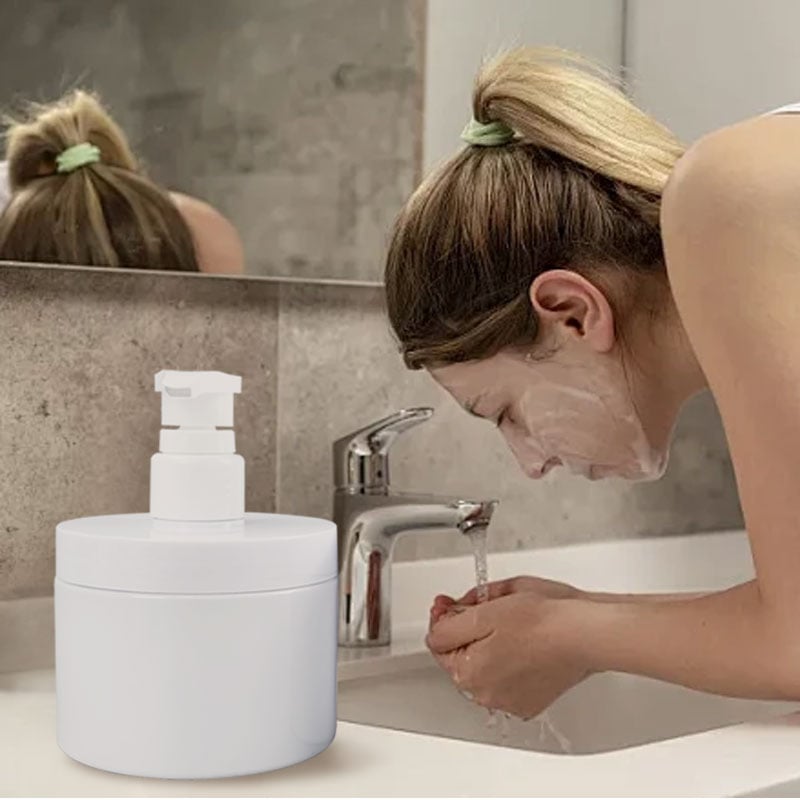
The difference between a generic hand wash bottle and a branded one comes down to how deep the customization goes.At the surface level, customization means choosing a color and adding a label. That's fine for a private-label product. But for skincare brands building a real identity, customization goes much deeper. It means controlling the bottle's silhouette—should it be cylindrical, oval, or square? It means choosing the finish—matte, glossy, frosted, or soft-touch? It means designing a pump that feels substantial and luxurious, not flimsy and disposable.
Brands that get this right create packaging that customers keep long after the product is gone. They create refill systems that turn one-time buyers into repeat customers. They create bottles that look good in Instagram photos and feel good in the hand.And here's the thing: none of this requires a massive budget. It requires a manufacturer who understands that packaging is not a commodity—it's part of the product experience.
Zhenghao Manufacturer
The hand wash market is growing. More brands are entering. More consumers are paying attention to packaging. The brands that succeed will be the ones that treat their hand wash bottle with the same seriousness as their formula.
At Zhenghao Packaging, we've been customizing hand wash bottles for skincare brands for over two decades. From foaming hand wash bottle designs to refillable systems, from 250ml hand wash bottle formats to larger capacities, we handle the details so you can focus on the formula. Our 20,000-square-meter factory and 8,600-square-meter dust-free workshop are equipped for orders of any size.
Ready to build a hand wash bottle that actually works? Let's talk about your formula, your brand, and what it takes to keep customers coming back.
Table of Contents
- Start With the Formula, Not the Bottle Drawing
- Material Selection: Matching the Bottle to the Formula
- Neck Finish and Closure: The Specifications Your Supplier Should Be Asking About
- Custom Hand Wash Bottle Design: More Than a New Shape
- The Dispensing Experience Is the Product Experience
- Capacity Should Match the Routine
- Refill Hand Wash Bottle Design Has to Work at the Sink
- Customization Depth: Where Good Brands Become Great Brands
- Zhenghao Manufacturer