 EN
EN
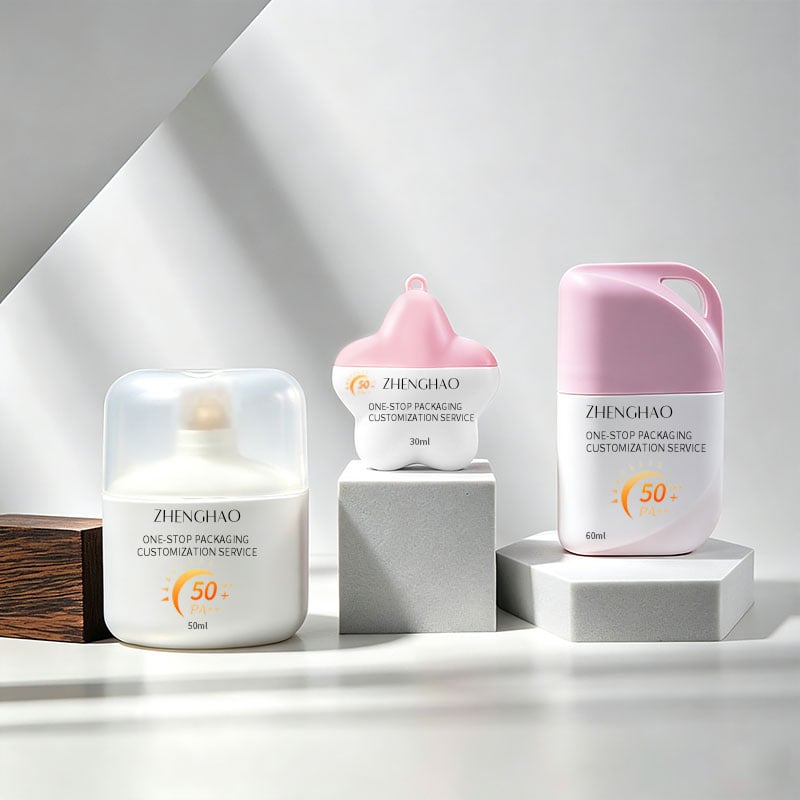
Skincare brand founders and production procurement teams often overlook how plastic resin directly changes product performance before launching sun protection ranges. Many indie labels grab generic off-the-shelf plastic vessels to cut early sampling costs, only to face costly setbacks after mass filling: faded UV filters, plastic discoloration under sunlight, or cracked containers during cross-border shipping. Every formula—from lightweight fluid sunscreen lotion bottle to thick tinted sun cream bottle—interacts differently with plastic structures, making material selection the foundational step of packaging planning.
A 2026 cosmetic packaging industry survey shows nearly 68% of sun care product returns trace back to mismatched plastic materials, far exceeding defects from printing or cap fitting. Unlike regular facial lotion containers, sun care formulations carry UV chemical actives that break down rapidly when exposed to incompatible plastic, light or oxygen. Investing time to compare PP, PET, HDPE and recycled PCR resin eliminates long-term inventory waste and customer complaints before your line hits store shelves.
Selecting proper plastic packaging for sun care formulas avoids formula degradation, transit leakage and shelf homogeneity. Drawing on 20+ years as a plastic packaging manufacturer, this breakdown compares PP, PET, HDPE and PCR materials to match your brand’s positioning, budget and global retail demands.
HDPE Sunscreen Bottle – Heavy-Duty Barrier Packaging for Water-Resistant SPF
Let’s start with the most popular option in the industry—HDPE, or High-Density Polyethylene. If you’ve ever picked up a bottle of sunscreen at the store, chances are it was HDPE.
This rigid plastic resists impact damage extremely well, perfect for large 100ml–250ml bulk formats sold at outdoor retailers, pool supply shops and grocery chains. Its matte opaque finish naturally hides minor surface scratches accumulated from stacked warehouse storage, which keeps retail display aesthetics consistent through full distribution cycles. Brands developing waterproof, sweat-resistant sport SPF lines rely heavily on HDPE construction to avoid leakage after repeated squeezing and rough handling by consumers.
HDPE also pairs smoothly with PCR recycled plastic blends for eco-conscious brands aiming to hit sustainability marketing targets. We produce 50% PCR HDPE packaging that retains the same drop-test performance as virgin resin, with only subtle off-white base tones that full pigment printing easily covers during customization. Many European sun care brands now specify PCR HDPE to comply with regional EPR packaging regulations without sacrificing container durability.
The cost? Low to medium. That makes it a practical choice for brands at any stage—from indie startups testing the waters to established players running large production volumes.one thing to keep in mind: HDPE’s opaque nature means you can’t show off the product inside. If your sunscreen has a beautiful tint or texture that you want consumers to see, HDPE isn’t going to do you any favors there.
PET Sunscreen Bottle: When Clarity Matters
Now, if visibility is part of your brand story, PET (Polyethylene Terephthalate) is where you want to look.
PET is the material behind those crystal-clear water bottles you see everywhere. It’s strong, lightweight, and offers excellent clarity. For sunscreen brands that want to showcase a vibrant formula or a luxurious texture, PET gives you that “premium” visual appeal that consumers associate with quality.Creating a luxury unboxing moment that opaque plastic cannot replicate, and this material works seamlessly for both stock and fully bespoke packaging orders.
But here’s the catch—PET isn’t as chemically resistant as HDPE. Some sunscreen formulations, particularly those with high concentrations of certain organic UV filters, can interact with PET over time. That doesn’t mean you can’t use it; it just means you need to do your compatibility testing before committing to a large production run.
PET also offers good barrier properties against moisture and oxygen, which helps preserve your formula’s stability. And from a sustainability angle, PET is widely recyclable (it’s recycling code #1). Many consumers recognize the PET recycling symbol and feel good about tossing the bottle in the blue bin after they’re done.
One limitation worth noting for formulators: pure clear PET offers minimal UV blocking, so brands with photo-sensitive reef-safe sunscreen must opt for tinted or pigmented PET blends during production. Our engineering team adjusts resin additives during moulding to boost light barrier performance without ruining transparency, solving a common pain point brands face when sourcing standard PET vessels from generic suppliers.
The cost? PET tends to cost a bit more than HDPE, and it’s not as flexible, so if you’re planning a squeeze bottle for a thick cream, PET might not be your best bet.
PP Sunscreen Bottle: The Heat-Resistant Contender
PP plastic stands out as the most flexible choice for lightweight, travel-focused sun care releases, and many brands commission a custom sunscreen bottle built entirely from this resin for mini-sized retail assortments. Its lightweight structure cuts logistics expenses by around 15% versus thick HDPE alternatives, which explains why it dominates small-format portable packaging for beach and daily touch-up use.
PP plastic stands out as the most flexible choice for lightweight, travel-focused sun care releases, and many brands commission a custom sunscreen bottle built entirely from this resin for mini-sized retail assortments. Its lightweight structure cuts logistics expenses by around 15% versus thick HDPE alternatives, which explains why it dominates small-format portable packaging for beach and daily touch-up use.
Here’s the thing about PP—it’s heat resistant. If your sunscreen manufacturing process involves hot-filling (which some brands do to ensure sterility), PP can handle the heat without warping or degrading. HDPE and PET? Not so much.
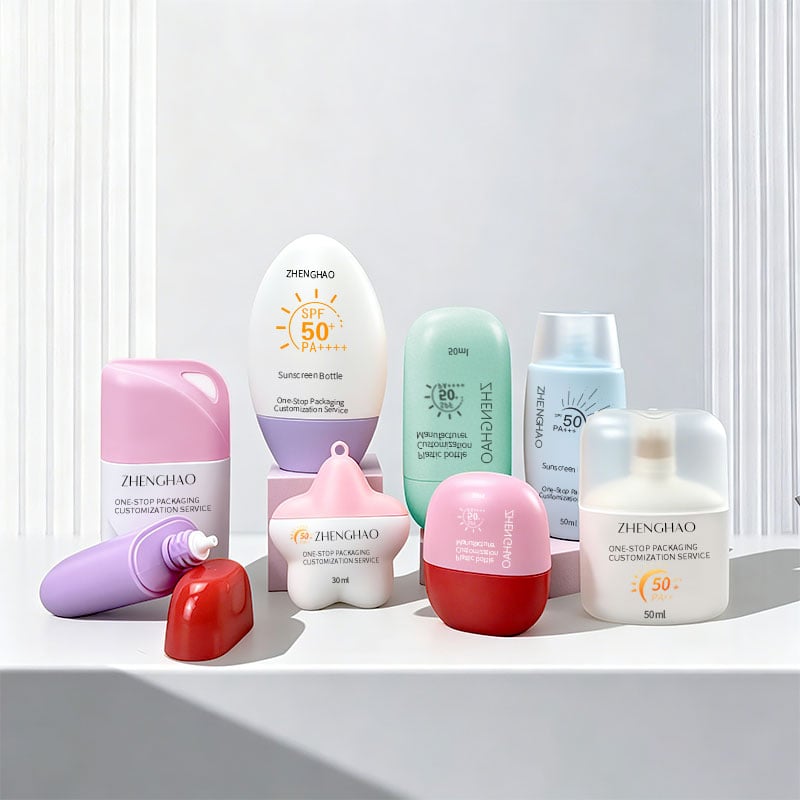
Brands targeting Gen Z shoppers often lean into cute sunscreen bottle silhouettes with PP construction; oval, egg-shaped and curved custom bodies are simple to mould with this resin, paired with colorful flip-top caps to stand out on social media retail feeds. One mid-sized Australian clean beauty brand we partnered with switched all their 30ml travel sun care packs to PP custom designs last year, and their online repeat purchase rate rose 22% after simplifying packaging ergonomics for on-the-go users.
For brands considering a mono-material approach (using the same plastic for both bottle and cap to improve recyclability), PP is worth exploring. It’s not the cheapest option, but it offers unique benefits that might make it the right fit for your specific needs.
PCR Sunscreen Bottle: The Sustainable Choice Your Customers Are Asking For
Here’s where things get interesting.PCR stands for Post-Consumer Recycled material. Simply put, it’s plastic that’s been reclaimed from products that consumers have already used and recycled. That water bottle you tossed in the recycling bin last month? It could end up as part of your next sunscreen bottle.
The PCR plastic packaging market was valued at USD 44.8 billion in 2025 and is projected to reach USD 70.6 billion by 2033. That’s not just a trend—that’s a fundamental shift in how the packaging industry operates.
For sunscreen brands, PCR offers a compelling sustainability story. Consumers are increasingly paying attention to packaging waste, and brands that can credibly claim to use recycled content have a real advantage at the shelf. A 2025 report shows that North America alone held a 38.3% share of the PCR packaging market, indicating strong demand from both brands and consumers.
The good news? PCR can be made from HDPE, PET, or PP. So you’re not locked into a specific material just because you want to go green. You can choose the base material that works best for your formula and then specify a percentage of PCR content.
The not-so-good news? PCR isn’t always as consistent as virgin plastic. Color can vary slightly from batch to batch, and the material properties might differ depending on the source of the recycled content. That’s why working with an experienced sunscreen bottle manufacturer matters—they know how to handle these variables and deliver a consistent product.
What About PETG and Other Options?
You might also come across PETG, which offers glass-like clarity with better impact resistance than standard PET. It’s a premium option for brands that want that high-end look without the weight and fragility of glass. But recycling infrastructure for PETG is more limited, so if sustainability is a priority, you’ll want to weigh that trade-off carefully.
How to Choose the Right Material for Your Brand?
So which material should you choose? Here’s the framework we use when working with brand clients:
Start with your formula. Is it a thin, sprayable lotion or a thick, goopy cream? Thin formulas work well in PET bottles with spray pumps. Thick creams are better suited for HDPE squeeze bottles.
Think about your brand story. Are you going for a clean, minimalist aesthetic? HDPE in natural white or pastel colors works beautifully. Want to show off a vibrant formula? PET’s clarity is unmatched. Positioning yourself as a sustainability leader? PCR content is non-negotiable.
Consider your usage scenario. Will your product be used primarily at the beach, where it’ll get tossed around and exposed to heat? HDPE’s durability wins. Is it a premium product meant for a vanity or bathroom counter? PET’s clarity and premium feel might be worth the extra cost.
Working with a Custom Sunscreen Bottle Supplier
As a professional plastic packaging manufacturer with 20,000㎡ production space and 8,600㎡ dust-free workshop, we streamline the entire custom packaging process for brands launching sun care ranges, removing the guesswork around material selection for every type of sunscreen bottle style. Our in-house engineers carry 28 years of plastic formulation experience, able to adjust resin blends, wall thickness and surface finishes to align with your formula chemistry, target market and brand aesthetic vision.
We maintain over 5,000 stock bottle moulds covering mini sunscreen bottles, squeeze formats, large family HDPE vessels and transparent PET premium containers, cutting lead times drastically for brands that want fast sampling without full new mould development. If you require fully exclusive shapes, custom Pantone color tinting or brand-specific surface printing, our design team delivers 3D renderings and physical pre-production samples before mass manufacturing begins.
Unlike generic suppliers that only sell ready-made stock containers, we provide one-stop packaging consultation tailored to sun care production challenges. We help clients balance material cost, sustainability claims and retail functionality, whether you need low-MOQ trial batches for startup lines or consistent bulk shipments for established global beauty brands. All our plastic packaging passes FDA, CE and Sedex audits, clearing customs barriers for US, EU and Southeast Asian retail distribution without hold-ups.
Table of Contents
- HDPE Sunscreen Bottle – Heavy-Duty Barrier Packaging for Water-Resistant SPF
- PET Sunscreen Bottle: When Clarity Matters
- PP Sunscreen Bottle: The Heat-Resistant Contender
- PCR Sunscreen Bottle: The Sustainable Choice Your Customers Are Asking For
- What About PETG and Other Options?
- How to Choose the Right Material for Your Brand?
- Working with a Custom Sunscreen Bottle Supplier