
 EN
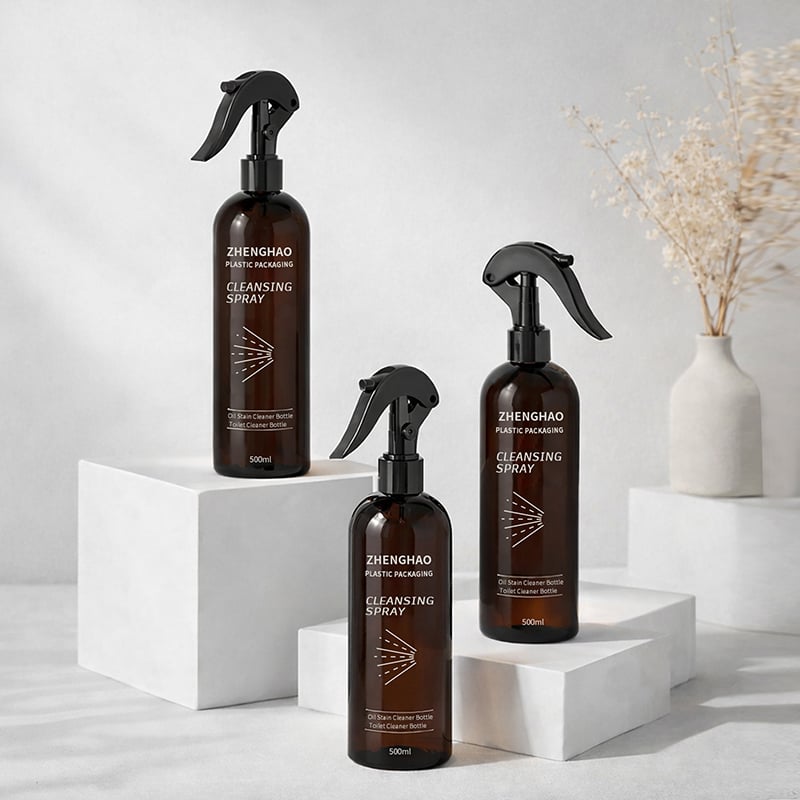
In Summary: Choosing the right custom trigger spray bottle means matching bottle resins, sprayer functions, and surface finishes to your specific product application. This guide explores key industry uses, material selection, decoration options, and practical tips for avoiding common sourcing pitfalls when working with a packaging manufacturer.
Spray packaging has shifted from a basic utility container to a frontline driver of brand convenience and repeat orders. According to market data from Fortune Business Insights, the global trigger sprayers market reached USD 491.8 million in 2025 and is projected to grow from USD 516.1 million in 2026 to USD 747.0 million by 2034, expanding at a compound annual growth rate (CAGR) of 4.70%. As the broader trigger spray bottle market grows across household hygiene, automotive detailing, and personal care, brand owners face a clear reality: how to secure and maintain a position for one's own brand in this market is of great significance.
Working directly with an experienced trigger spray bottle manufacturer eliminates many headaches before your production run begins. At Zhenghao Packaging, our 10-year veteran packaging specialists support brand buyers 1-on-1 from initial shape selection to mass production—leveraging our in-house CNC mold workshop, 5,000+ stock molds, and 10+ blow molding lines to deliver complete bottle-and-sprayer sets that perform reliably in real-world conditions.
Core Industry Applications for Trigger Spray Bottle
Not every spray bottle with trigger assembly is built for the same job. A lightweight salon hair mist sprayer will fail within days if filled with heavy-duty wheel cleaner, while an industrial-grade chemical sprayer feels overly bulky for a boutique linen spray. Understanding how end users hold, aim, and store the bottle in each industry helps you specify the right size and nozzle style from day one.
| Industry | Typical Products | Popular Bottle Sizes | Key Packaging Priority |
| Household Cleaning | Kitchen degreasers, glass cleaners, bathroom disinfectants | 500ml – 750ml (16 oz – 24 oz) | Child-resistant lock (ON/OFF) and ergonomic grip for repetitive squeezing |
| Automotive Detailing | Iron/rust removers, wheel cleaners, tire shine, ceramic detailers | 500ml – 1000ml (32 oz) | High chemical resistance and wide stable base that won't tip over in garages |
| Hair Salons & Personal | Water cutting mists, leave-in conditioners, curl refreshers | 250ml – 500ml (8 oz – 16 oz) | Continuous ultra-fine mist without dripping on salon capes; sleek shelf look |
| Lawn & Garden Care | Leaf shine, organic plant food, indoor misting, weed sprays | 500ml – 1000ml (16 oz – 32 oz) | Transparent and simple desig |
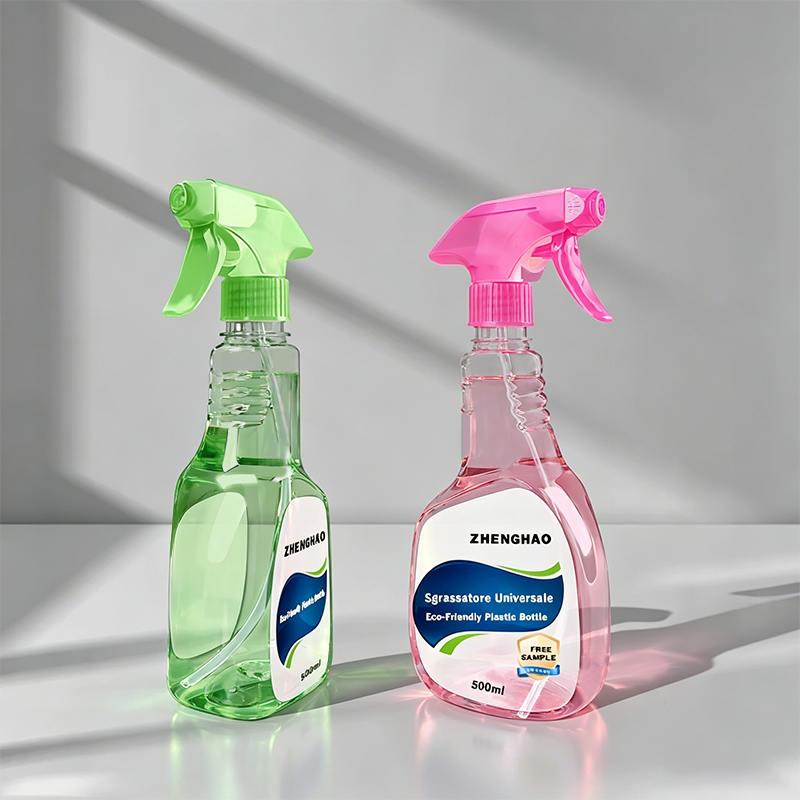
Clear PET 500ml trigger spray bottle for household clear
How to choose the material for trigger spray bottle ?
Choosing the wrong plastic for a plastic trigger sprayer bottle is the fastest way to trigger a product recall. Active ingredients—especially solvents, acids, alkaline degreasers, and essential oils—can attack incompatible plastics over time, causing bottles to soften, warp, or crack along the bottom seam while sitting on warehouse pallets.
As a specialized packaging supplier, Zhenghao guides brand buyers toward four proven resin choices based on chemical strength and shelf positioning:
HDPE (High-Density Polyethylene): The undisputed workhorse for household cleaners, bleach sprays, and automotive rust removers. HDPE offers unmatched chemical resistance, opaque UV protection for light-sensitive formulas, and superior impact durability if dropped on concrete garage floors.
PET (Polyethylene Terephthalate): The go-to choice when visual clarity sells the product—such as colorful salon hair mists, botanical room sprays, or clear glass cleaners. PET delivers glass-like transparency at a fraction of the shipping weight, though it should be avoided for strong solvents or high-alkaline industrial cleaners.
PCR (Post-Consumer Recycled HDPE & PET): Brands selling into major retail chains increasingly incorporate 30% to 100% PCR resin to meet sustainability mandates while maintaining the same chemical resistance and drop strength as virgin plastics.
PP (Polypropylene): Commonly used for both the trigger head mechanism itself and specialized hot-fill or high-solvent containers. Pairing a PP bottle with a PP trigger sprayer also creates a 100% mono-material package that consumers can recycle without separating components.
Industry analysis from Packaging World notes that mono-material all-polyolefin trigger spray designs and high-PCR bottle walls are rapidly becoming baseline procurement requirements for major North American and European household and personal care retailers.
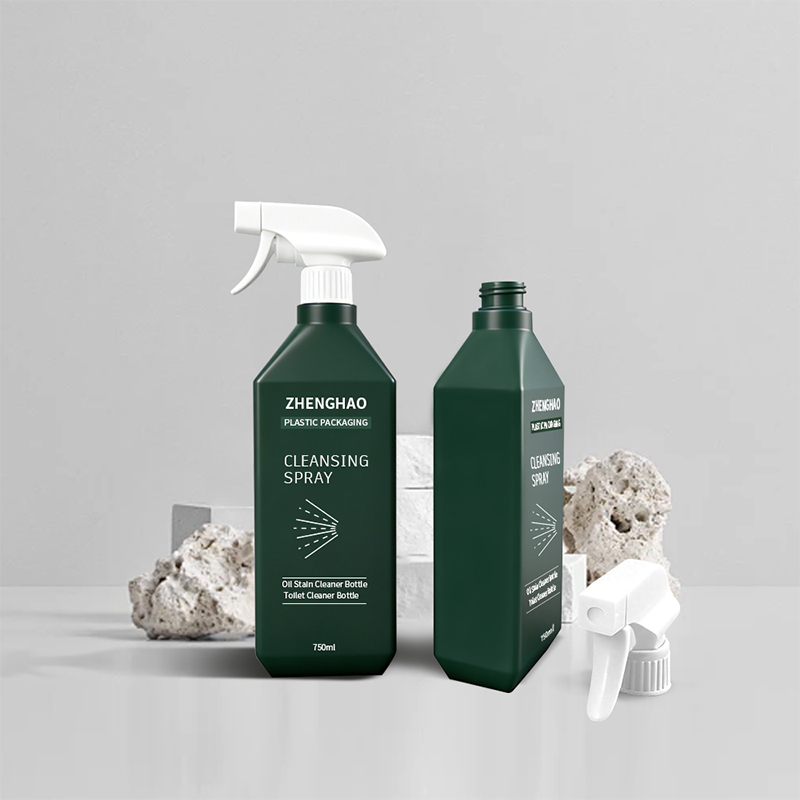
HDPE has high strength and excellent corrosion resistance, making it suitable for chemical spray bottles.
Surface Decoration Options: Matching Labels & Printing to Your Market
Surface decoration is what turns a plain plastic bottle into a recognizable retail product, yet the best decorating method depends heavily on where your bottle will be used and how much chemical exposure it faces. While brands can technically apply any finish to any bottle, heavy-duty household cleaners generally rely on waterproof pressure-sensitive labels to display dense regulatory warnings and multi-language ingredient lists cost-effectively, whereas salon hair care and boutique home sprays favor direct UV silk-screen printing for a sleek, waterproof, "no-label" luxury look.
Here is how different decoration methods stack up across common trigger spray categories:
| Decoration Method | Best-Suited Categories | Key Commercial Advantages | Practical Considerations |
| Waterproof BOPP / Vinyl Labels | Household cleaners, auto detailing chemicals, lawn & garden sprays | Cheap cost and accommodates small-font safety warnings and barcode updates | Standard paper labels will peel and bubble —specify synthetic waterproof film with chemical-resistant lamination |
| UV/Silk-Screen Printing | Salon hair mists, leave-in conditioners, botanical room sprays | Crisp, raised tactile ink that never peels when wet; creates a clean, upscale aesthetic on clear PET or matte HDPE | Best for 1 to 3 solid brand colors; complex photographic gradients require labels or heat transfer instead |
| Hot Stamping | Prestige hair care, aromatherapy linen sprays, boutique home care | Delivers true metallic gold, silver, or rose-gold shine that standard metallic inks cannot replicate | Usually applied as an accent (logo or border) alongside silk-screen printing to keep unit costs balanced |
| Shrink Sleeves | High-volume industrial cleaners, large 32 oz chemical bottles | 360-degree full-body graphics with extreme abrasion and chemical resistance | Requires higher minimum order quantities (typically 20,000+ units) due to dedicated sleeve printing or mold setup |
4 Costly Mistakes When Customizing Trigger Bottles
Anyone who has ever dealt with a batch of leaking sprayers knows that trigger packaging has more moving parts—and more potential failure points—than a standard screw-cap bottle. When sourcing a bottle with trigger sprayer components from a factory, watch out for these four common traps:
1.Bottle Wall Collapse (Vacuum Paneling)
Every time a user pulls the trigger, liquid exits the bottle and air must flow back in through a tiny vent hole in the sprayer to equalize pressure. If a brand chooses an overly thin wall for a large container—such as a 32 oz spray bottle with trigger—or if the vent hole clogs with thick liquid, internal vacuum pressure sucks the bottle walls inward until the container looks crushed. Adding structural horizontal ribs or calibrating wall thickness during blow molding prevents this completely.
2.Corroded Internal Metal Springs
Standard trigger sprayers rely on a small stainless steel spring inside the liquid chamber to push the trigger back out. However, acidic rust removers, bleach cleaners, and saltwater hair sprays will corrode standard metal springs within weeks—turning your liquid rusty brown and jamming the trigger. For corrosive formulas, always specify an external-spring (all-plastic liquid pathway) trigger head so your formula never touches metal.
3.Incorrect Dip Tube Length and Cut Angle
It sounds minor, yet an improperly cut dip tube creates instant customer complaints. If the tube is 5mm too short, consumers are forced to throw away the bottom 15% of your product. If it is too long, the tube presses flat against the bottom center of the bottle and seals itself shut, blocking liquid flow entirely. A reliable factory always matches dip tube length to the exact bottle height with a 45-degree V-cut tip so it rests cleanly in the bottom corner chime.
4.Neck Thread Mismatch & Transit Leaks (28/400 vs. 28/410)
Trigger sprayers most commonly use 28mm neck finishes, but mixing up a 28/400 sprayer (single turn thread) with a 28/410 bottle (one-and-a-half turn thread) leaves a microscopic gap that leaks inside e-commerce shipping boxes. Even with matching threads, high-viscosity or foaming formulas require expanded polyethylene (EPE) foam liners inside the closure and a positive lock-off nozzle to survive horizontal parcel shipping.
According to packaging dispensing benchmarks highlighted by Beauty Packaging, pre-compression fine-mist trigger sprayers and ergonomic contoured grips are driving rapid adoption across salon hair care and prestige home fragrance lines.
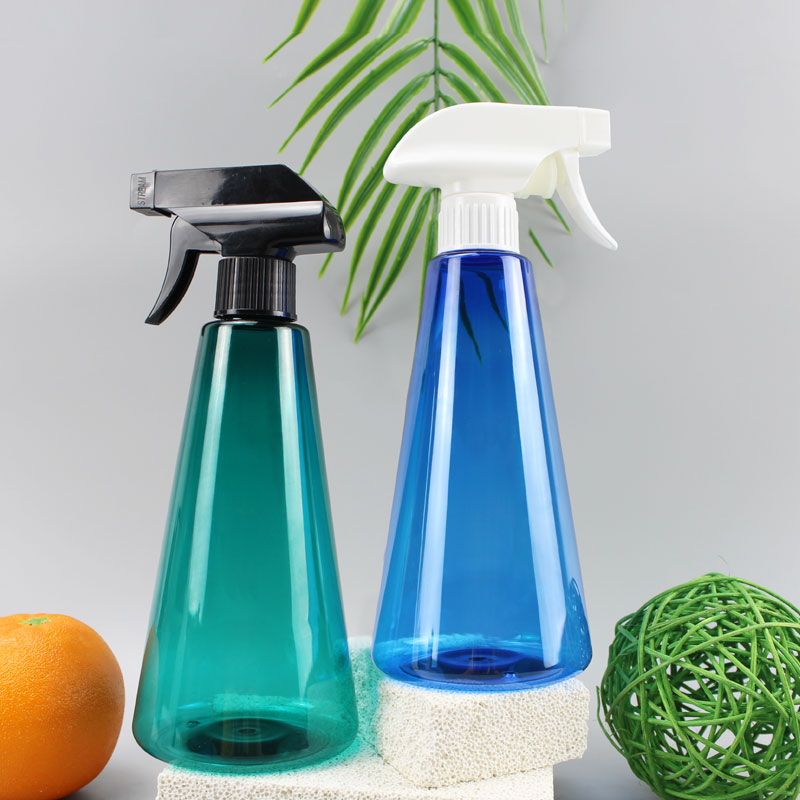
Transparent PET trigger spray bottle, suitable for watering plants
How to Choose a Reliable Trigger Spray Bottle Manufacturer
Finding a supplier that merely sells cheap bottles is easy, but finding a true trigger spray bottle manufacturer capable of supporting your brand from test launch to national retail distribution takes closer vetting. When comparing factories, evaluate these five practical capabilities before placing your deposit:
Extensive Stock Mold Library for Fast Market Entry
For emerging brands or new product launches, paying $4,000 to $7,000 for custom tooling before proving market demand ties up valuable cash flow. A strong factory maintains thousands of ready-to-use stock molds—covering classic round, oval, and ergonomic waist-tapered shapes across 200ml to 1000ml capacities—allowing you to launch in weeks with a manageable to 5,000 unit MOQ.
In-House Custom Tooling Capabilities When You Scale
Most of all brand want a proprietary bottle silhouette, embossed brand logo, or custom finger-grip contour that competitors cannot copy. Working with a manufacturer that operates its own in-house CNC mold workshop—rather than outsourcing tooling to third-party shops—cuts sampling lead times to 20-25 days and ensures your bottle and trigger shroud fit together seamlessly.
Rich and mature surface customization capabilities
Surface treatment is the only method that can immediately set one apart from competitors and enhance recognizability. Therefore, cooperative factories can create distinctive and unique attractive appearances that are stable. Currently, many factories can achieve high-end surface treatments such as "soft touch", but there are significant differences in quality, effect and duration.And look for a supplier equipped with in-house automatic UV silk-screen printers, hot-stamping lines, and label application support so your bottles are molded, decorated, and packed cleanly in one facility.
Practical Quality Control That Catches Real-World Failures
Paper certificates mean very little if bottles leak inside e-commerce mailers or crack on filling lines. Verify that your manufacturer conducts hands-on functional checks on every batch—including vacuum leak testing, neck thread gauge verification (28/400 vs. 28/410), sprayer actuation tests, and 1.2-meter filled drop tests—before releasing goods for shipment.
Batch-to-Batch Consistency for Repeat Orders
One of the biggest frustrations for growing brands is when reorder #2 arrives with a slightly different Pantone shade, looser cap torque, or thinner bottle walls than the approved golden sample. Choose an established manufacturer with standardized resin formulas, spectrophotometer color calibration, and dedicated 1-on-1 account management—such as Zhenghao Packaging—so your packaging looks and performs identically every time you reorder.
Do you need to contact Zhenghao to complete the customization of your trigger spray bottle? Please click below to obtain the quotation.
