
 EN
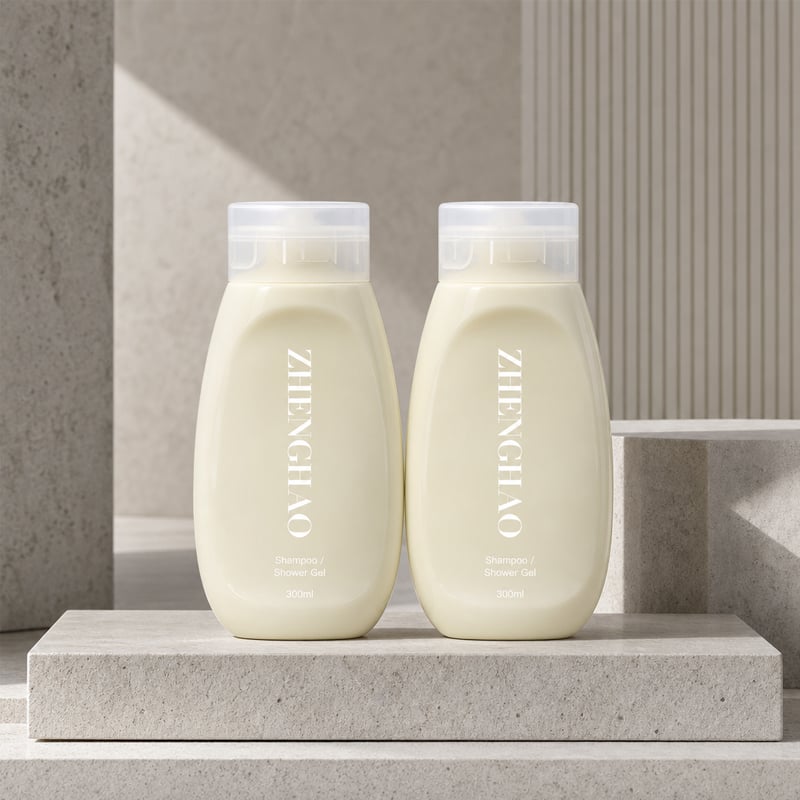
In Summary: Designing a high-performing custom shampoo squeeze bottle comes down to balancing squeeze ergonomics, durability, and brand aesthetics. This guide walks hair care brands through the key decisions behind custom packaging—covering how to select the right plastic resins, calibrate wall thickness across different bottle sizes, match dispensing caps to formula viscosity, and choose between stock molds or custom tooling.
Before approving mass production with your manufacturer, be sure to confirm three essentials: consistent wall distribution for clean rebound, proper cap orifice sizing for smooth dispensing, and mold compatibility with your filling line.
Across the global hair care aisle, the shampoo squeeze bottle remains the dominant packaging format for everyday shampoos, conditioners, and travel-size hair washes—outpacing rigid jars and complex pump dispensers in unit volume, freight efficiency, and single-handed shower usability. Yet for hair care brands, choosing the right squeeze bottle structure directly governs customer retention and unit economics: an overly rigid wall frustrates consumers trying to dispense thick conditioner with wet hands, a poorly matched cap orifice leads to messy product waste, and uneven wall thickness causes stress cracking or paneling during transit.
The global beauty and personal care packaging market reached USD 41.71 billion in 2025, on track to USD 89.84 billion by 2034 (CAGR 8.90%), per Fortune Business Insights.But that headline number obscures where the real action is for shampoo, body wash, and conditioner brands. The specific form of the shampoo squeeze bottle has a global market size ranging from 700 million to 1 billion US dollars, and it is maintaining a steady growth trend.
For hair care founders and packaging buyers, getting a custom shampoo squeeze bottle right is never as simple as picking a pretty silhouette from a catalog. Anyone who has stood in a hot shower with soapy hands, furiously shaking an upside-down bottle because the last third of a thick conditioner refuses to budge, knows how frustrating poor squeeze mechanics can be. Working directly with a specialized plastic bottle manufacturer helps you calibrate resin blends, wall thickness, and closure orifices around your exact formula viscosity.
Choosing Resins for a Shampoo Squeeze Bottle
The plastic resin you select determines your bottle's squeeze flexibility, visual clarity, sustainability story, and unit cost. While standard HDPE remains the workhorse of the hair care aisle, brands targeting high-clarity botanical formulas or eco-conscious clean-beauty shoppers frequently turn to PET, PCR, or plant-filled wheat straw composites
| Resin Type | Squeeze Feel & Look | Relative Cost | Key Advantages | Potential Limitations |
| HDPE | Firm yet flexible squeeze with fast rebound; naturally translucent to opaque | Low (Most economical baseline) | Superior chemical resistance to surfactants and essential oils; durable and drop-proof | Not crystal-clear; shows visible parting lines unless matte-finished |
| LDPE / HDPE Blend | Ultra-soft, cushiony squeeze that empties thick formulas easily | Low – Medium | Effortless dispensing for heavy conditioners and hair masks; resists denting | Lower heat resistance |
| PET | Rigid-to-semi-flexible walls with glass-like 90%+ clarity | Medium | Showcases colorful, shimmering, or botanical-infused shampoos on retail shelves | Less squeezable than PE |
| PCR-HDPE/PET | Matches virgin PE squeeze or PET clarity depending on base resin | Medium – High | Meets strict Sephora, Ulta, and EU sustainability mandates; reduces carbon footprint | Slight batch-to-batch base tint variation |
| Wheat Straw | Sturdy, matte tactile feel with organic speckled plant fibers | High | Distinctive natural, plant-based visual storytelling | natural fiber specks limit ultra-bright white colors |
Industry reporting from Beauty Packaging highlights that hair care brands are increasingly pairing soft-touch polyethylene blends with sustainable PCR or plant-fiber composites to stand out in crowded retail aisles while reducing virgin plastic reliance.
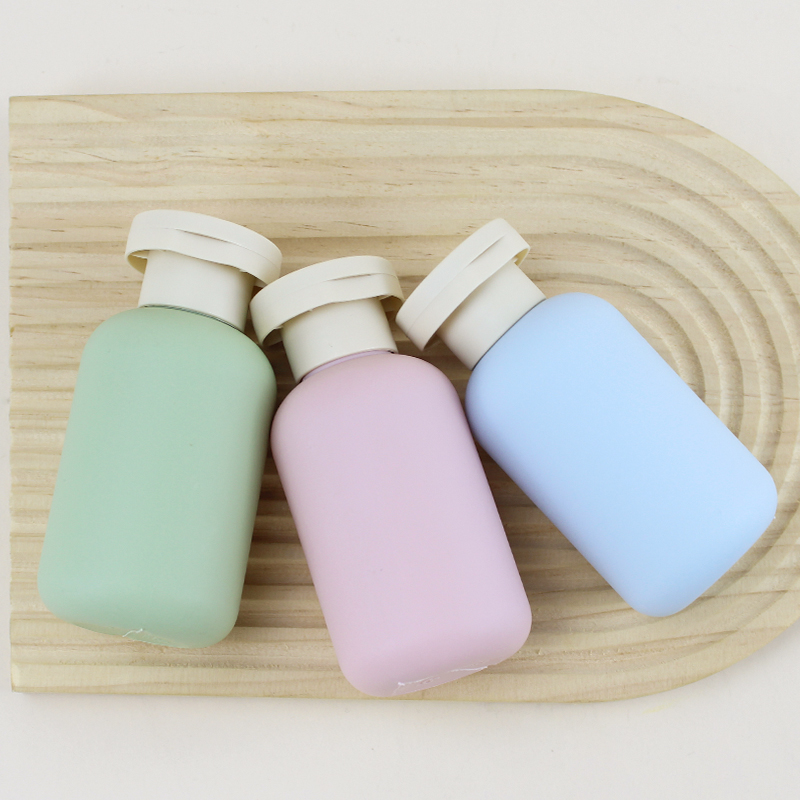
Eco-friendly wheat straw composite squeeze bottles offer a natural, plant-based aesthetic for sustainable hair care lines
.
Matching Resin Stiffness to Formula Viscosity
When developing a squeeze bottle for shampoo versus conditioner, never use identical wall stiffness across both SKUs just to simplify ordering. Thin, watery clarifying shampoos flow easily through small cap openings, meaning a slightly firmer HDPE or thin-walled PET shell gives your bottle a crisp, architectural silhouette without making dispensing difficult. Conversely, silicone-rich conditioners or creamy sulfate-free shampoos cling to inner walls; pairing them with a softer HDPE/LDPE blend ensures customers can squeeze out the last 15% of product without thumb fatigue.
Calibrating Wall Thickness: Bottle Size, Weight & Drop Durability
Wall thickness is the hidden engineering variable that separates a cheap-feeling container from a durable, retail-ready product. Many first-time buyers assume making the plastic thicker automatically makes the bottle feel more luxurious—but on a squeeze bottle, excessive wall thickness backfires immediately by turning a gentle press into an arm workout.For personal care brand , this is not conducive to the experience of their end users. Therefore, the appropriate wall thickness lies at the intersection point of packaging usability and effectiveness.
At Zhenghao, our blow molding engineers calibrate parison programming on our 10+ Extrusion Blow Molding (EBM) lines based on exact bottle volume and cross-section geometry:
Small Travel & Hotel Sizes (50ml – 100ml): A small squeeze bottle shampoo format requires thinner walls (typically 0.65mm to 0.85mm). Because smaller cylinders naturally resist inward pressure due to their tight curvature radius, going thicker than 0.9mm makes travel bottles nearly impossible to squeeze with two fingers.
Standard Retail Sizes (250ml – 400ml): The sweet spot for daily shower use sits between 0.85mm and 1.10mm. This thickness provides enough hoop strength to prevent the bottle from collapsing inward (paneling) as temperature drops in a cooling bathroom, while still flexing smoothly under moderate palm pressure.
Large Family & Salon Sizes (500ml – 1000ml): Larger flat-sided or oval bottles have wider surface panels that bow outward or dent easily during transit. For a 500ml shampoo, a nominal wall thickness of 1.0–1.5 mm in HDPE typically balances squeezability and top-load strength.
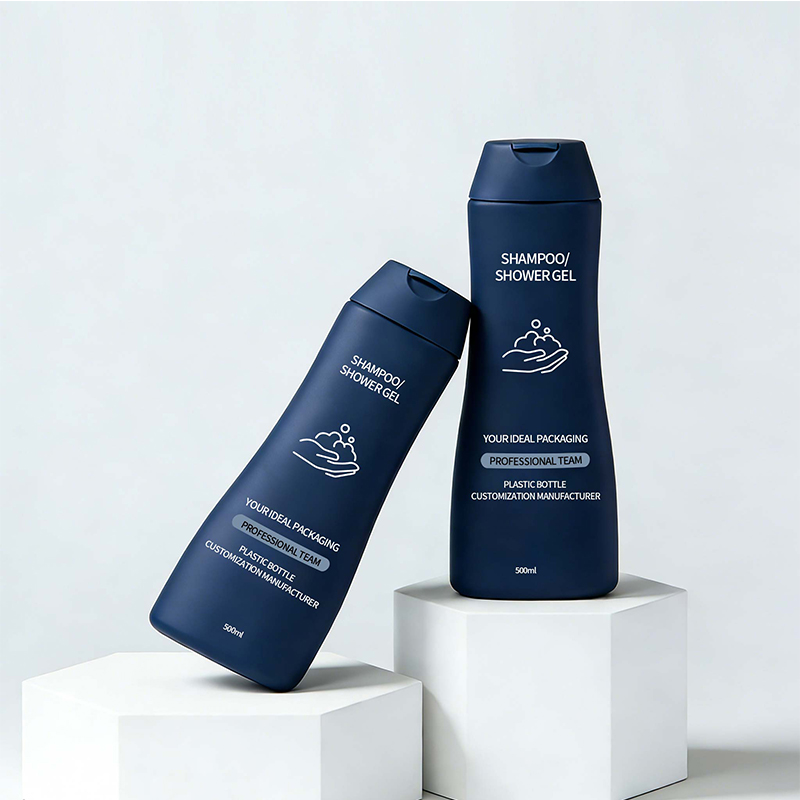
Custom 500ml shampoo squeeze bottles styled with matching flip-top caps
According to packaging performance testing documented by Packaging World, uneven parison wall distribution at the base pinch-off seam is the number one cause of burst failures when filled personal care bottles undergo 1.2-meter retail drop tests.
Matching Caps & Orifices: Flip-Top, Disc-Top & Nozzle Control
Even the best-engineered bottle fails if paired with the wrong dispensing cap. When hair care brands source bottles from one vendor and closures from another, subtle neck thread mismatches or poorly sized exit orifices lead to messy dripping, clogged nozzles, or caps popping open inside shipping cartons.
Because Zhenghao operates dedicated injection molding machines alongside our blow molding lines, we manufacture and test bottle-and-cap sets together—matching standard neck finishes (20/410, 24/410, and 28/410) and orifice diameters to your formula's flow rate:
Disc-Top Caps (Press-Top Closures): Sleek, flush profile that opens with a single thumb press. Best for medium-to-low viscosity shampoos and tonics using a 3.0mm to 4.5mm orifice. Heavy, waxy conditioners can clog standard disc-top channels unless widened to 5.0mm+.
Flip-Top Caps (Snap-Hinge Closures): Offers a wider opening (5.0mm to 8.0mm orifice) with a self-cleaning spud pin molded into the lid that clears dried conditioner residue every time the cap snaps shut. Ideal for thick conditioners, hair masks, and inverted tottle designs.
Twist-Open / Nozzle Caps (Yorker & Turret Spouts): Precision pointed tips (1.5mm to 3.0mm orifice) designed for targeted scalp treatments, hair oils, and root-applying toners where consumers apply product directly along hair parts.
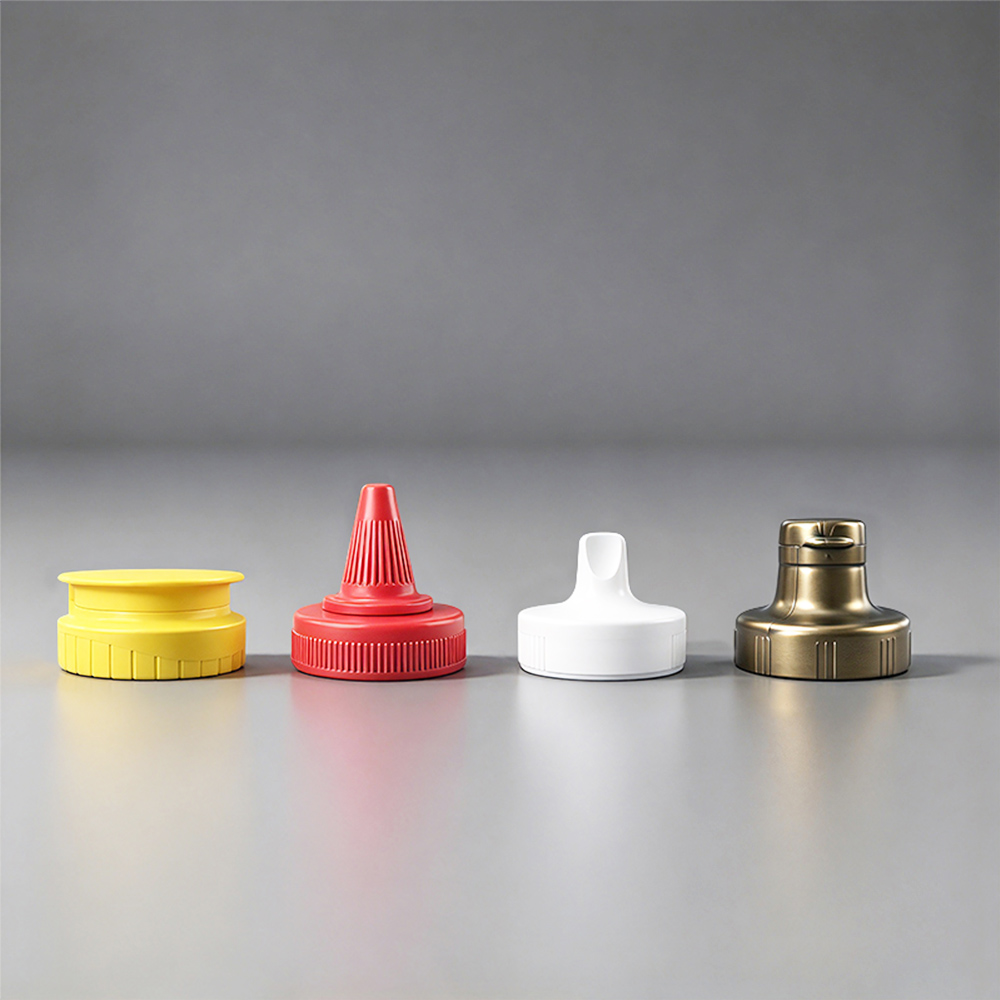
A diverse selection of precision-threaded dispensing caps engineered for shampoo squeeze bottles with leak-proof performance
Stock Molds vs. Custom Tooling: Shaping Your Brand Silhouette
Before investing in a custom mold, decide whether your product launch is better served by fast-turnaround stock shapes or a proprietary silhouette that locks in long-term brand equity. With 6 CNC machines and 10+ veteran mold makers in-house, Zhenghao helps hair care brands execute both paths efficiently:
Launch Fast with 5,000+ Stock Molds (3,000 – 5,000 Units MOQ | 15–20 Days): Beyond classic Boston rounds and flat ovals, our 5,000+ stock mold library includes ergonomic waist-tapered silhouettes and contoured shower-grip bottles with flush-fitting flip-top caps
Build Brand Equity with Custom CNC Tooling (10,000+ Units MOQ | 20–25 Days Tooling + 35 Days Run): When scaling into national retail chains or building a flagship line, proprietary tooling protects your bottle silhouette from copycats. Our in-house mold team engineers custom grip ribs, debossed brand monograms, flush seamless cap-to-body transitions, and unified family molds (such as 250ml, 500ml, and 750ml matching sets) so your entire lineup commands unmistakable shelf presence.
Quick Pre-Quote Checklist for Hair Care Buyers
To help our 10-year veteran packaging specialists recommend the exact resin grade, wall thickness, and cap orifice within 24 hours, simply share four details when inquiring:
1.Formula Type & Viscosity: Clarifying shampoo, creamy conditioner, thick hair mask, or watery scalp tonic.
2.Target Bottle Volume: Travel size (50ml–100ml), standard retail (250ml–400ml), or salon/family size (500ml+).
3.Preferred Cap Style & Finish: Flip-top, disc-top, or nozzle cap, plus glossy, matte frost, or soft-touch surface feel.
4.Estimated First-Order Quantity: Helps us advise whether stock molds or custom CNC tooling gives you the best unit economics.
Don't let wall thickness or cap mismatches delay your launch. Contact Zhenghao Packaging's engineering team today to get a free technical consultation, material recommendations, and a quick quote for your custom shampoo squeeze bottles.
