 EN
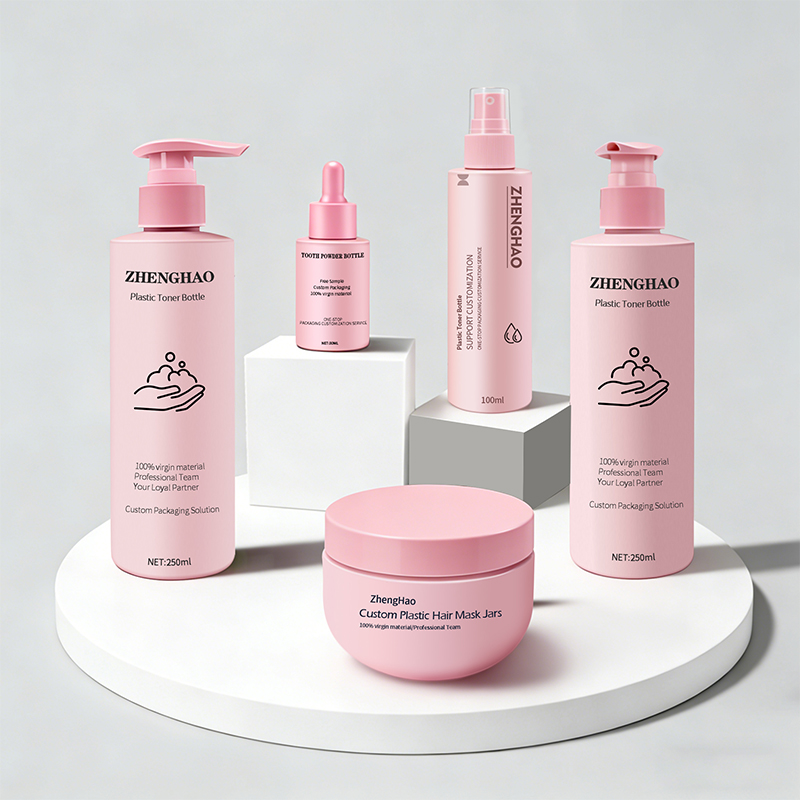
In Summary: For most custom skincare launches, choosing between existing stock molds and in-house custom CNC tooling is the primary factor governing your upfront budget and speed to market. Pairing high-clarity PET/PETG or squeezable HDPE resins with matching dispensing closures ensures shelf appeal without the freight weight or breakage risks of glass.
Before approving your pre-production samples, always verify three things with your manufacturer: neck finish dimensional tolerances, batch-to-batch color consistency across bottles and caps, and inline leak-testing protocols.
A sleek 3D rendering of a serum or toner bottle can look effortless on screen—sculpted curves, crisp shoulders, and a thick, weighted base that screams prestige beauty. Yet for cosmetic brand founders and packaging buyers, the real commercial anxiety starts right after design sign-off: Will the plastic bottle actually mimic heavy glass? Can the pump neck handle thick foundation or active essential oils without leaking? And can the factory hit our seasonal beauty launch window without blowing the tooling budget?
Working directly with experienced custom cosmetic bottle manufacturers eliminates these launch risks before steel is ever cut. At Zhenghao Packaging, we pair every brand 1-on-1 with a dedicated account specialist who brings over 10 years of cosmetic packaging experience. From engineering weighted-base PETG serum containers to producing squeezable HDPE sunscreen bottles, here is how we turn beauty concepts into high-margin retail packaging.
Common Types of Plastic Cosmetic Bottles
Selecting to custom right cosmetic bottle structure goes far beyond visual aesthetics—it is dictated by your formula's viscosity, active ingredient sensitivity, and how consumers apply the product. A watery facial toner requires an atomizing fine-mist sprayer or controlled orifice reducer, whereas thick liquid foundations, sunscreens, and eye serums demand precision pumps, droppers, or roll-on applicators.As a brand owner, you should clearly understand what type of cosmetic packaging you are looking for.Below is a practical breakdown of the primary plastic cosmetic bottle types manufactured for skincare, makeup, and personal care lines
| Bottle Type | Key Features | Structural Difference | Recommended Resins | Typical Capacity | Applications |
| Fine-Mist Spray Bottles | Disperse low-viscosity liquids into an ultra-fine | Equipped with micro-orifice atomizing nozzles | PET, PETG, HDPE | 30ml – 250ml | Setting sprays, facial mists, toners |
| Lotion Pump Bottles | Dispense viscous liquids cleanly | Calibrated spring-loaded pump engines with dip tubes | PETG, PET, HDPE, AS | 30ml – 500ml | Liquid foundations, facial cleansers, serums |
| Dropper Bottles | Drop-by-drop dosage control of concentrated actives. | Combines a squeezable silicone/NBR rubber bulb with a glass or PP pipette | PETG, PET, HDPE | 10ml – 60ml | Facial serums, facial oils, hair essences |
| Foam Pump Bottles | Create instant rich foam without gas propellants. | Uses a specialized mesh-chamber pump that mixes liquid cleanser | PET, HDPE | 50ml – 200ml | Facial cleansers,hand wash |
| Roll-On Bottles | Targeted spot application directly onto skin. | Integrated roller ball housing (PP ball) delivers cooling massage | HDPE, PP, PETG | 5ml – 50ml | Eye serums, acne spot treatments, lip oils |
| Squeeze Bottles | Offering the lowest unit cost and effortless one-handed dispensing. | two-piece construction (flexible bottle body + dispensing cap | HDPE, LDPE, PP | 60ml – 400ml | sunscreen,tanning oil |
| Airless Pump Bottles | Achieving 98%+ evacuation. | Piston-driven vacuum system that pushes product upward as it dispenses | PP, AS, PETG | 15ml – 100ml | Retinol/Vitamin C serums, peptide creams |
Cosmetic Tooling Engineering: Weighted Bases, Pump Alignment & Speed to Market
Unlike standard beverage or household containers, custom cosmetic bottle tooling must balance luxury ergonomics with mechanical precision. If a tall facial lotion bottle is too top-heavy, it tips over on a vanity counter every time a consumer presses the pump. Similarly, if the neck finish lacks anti-rotation lugs, luxury electroplated overshells will spin freely instead of unscrewing cleanly.
At Zhenghao, our in-house mold workshop operates 6 precision CNC machining centers staffed by over 10 veteran mold makers who specialize in beauty packaging geometry. Because tooling engineers work directly alongside our blow molding floor, we solve cosmetic-specific structural challenges upfront:
Custom Cosmetic CNC Tooling (25–30 Days to T1 Sample): Need a signature asymmetrical silhouette, debossed brand monogram, or thick glass-like base distribution? Our CNC team cuts custom aluminum or hardened steel molds in-house—delivering T1 cosmetic bottle samples in 20 days with optimized parison control so thick bases cool without ugly sink marks.
5,000+ Stock Cosmetic Bottle Molds (Zero Tooling Cost): Launching a multi-SKU skincare collection on a lean budget? Choose from our library of over 5,000 existing cosmetic molds—ranging from 15ml eye serum vials and 30ml foundation bottles to 200ml toner bottle—and customize the color, finish, and dispenser without upfront mold .
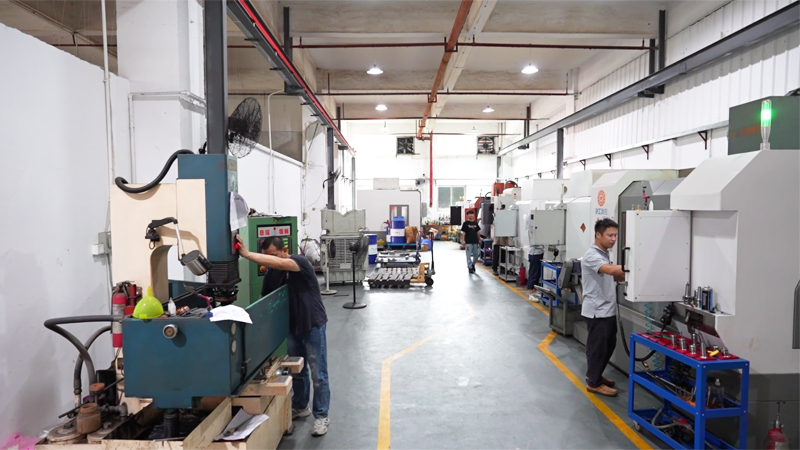
CNC Machining for Cosmetic Bottle Molds
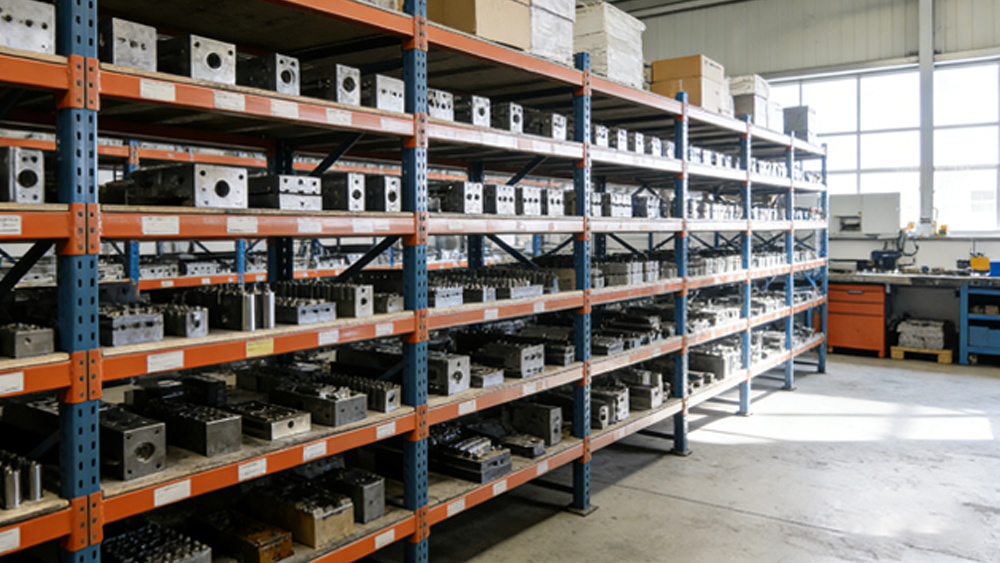
Stock Cosmetic Bottle Molds
EBM, ISBM & Injection Molding: Matching Plastics to Active Skincare Formulas
Cosmetic formulations are chemically complex—packed with botanical essential oils, AHAs/BHAs, UV filters, and silicone-rich makeup pigments that can degrade the wrong plastic. A reliable cosmetic bottle supplier matches your exact formula to the right molding process so your packaging delivers prestige aesthetics without chemical stress-cracking or product oxidation.
Operating over 10 EBM and ISBM blow molding lines alongside dedicated injection molding machines, Zhenghao produces both the cosmetic bottle and its matching cap or actuator collar in-house. Brands can also incorporate 30% to 100% Post-Consumer Recycled (PCR) resins without sacrificing clarity or structural integrity, meeting strict Sephora Clean and European eco-packaging standards.
| Cosmetic Packaging Goal | Recommended Process | Primary Resins | Beauty Brand Advantage |
| Prestige Glass-Like Clarity | Injection Stretch Blow Molding (ISBM) | PET, PETG, PCR-PET | Crystal-clear 90%+ transparency for serums, toners, and facial mists—at 60% less freight weight and zero breakage |
| Controlled Squeezable Dispensing | Extrusion Blow Molding (EBM) | HDPE, LDPE,PCR-HDPE | High chemical resistance for oily makeup removers, exfoliating acids, and squeezable sunscreen bottles |
| Wide mouth Design | Precision Injection Molding | PP, ABS, AS, PMMA | Crisp luxury edges, double-wall bottle constructions, and seamless snap-fit closure alignment |
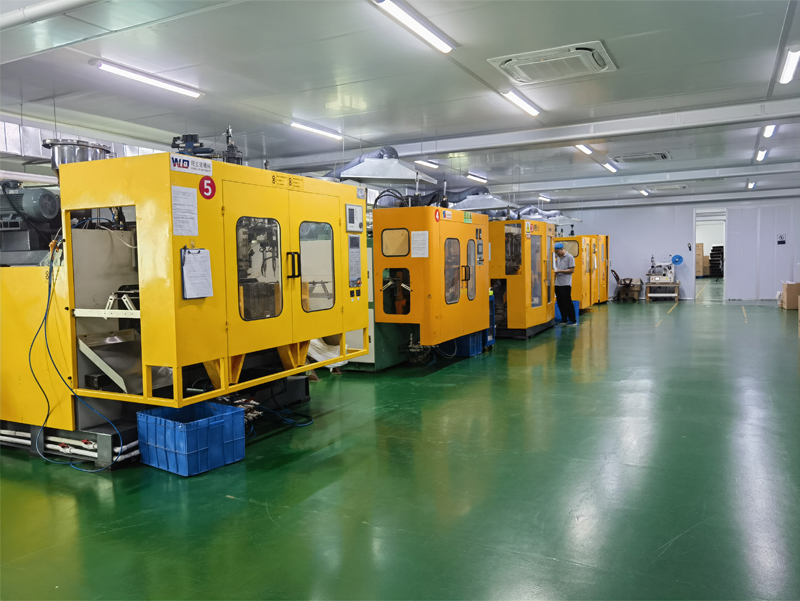
EMB Machine for Cosmetic Bottle Production
Surface Finishes & Color Luxury: How Cosmetic Bottles Win the Vanity Test
In beauty and personal care, packaging is not merely a container—it is a tactile extension of the brand's identity that sits on a consumer's vanity for months. Consumers subconsciously link the weight, surface texture, and color precision of a cosmetic bottle to the efficacy of the formula inside. If a silk-screened logo flakes off when exposed to facial oils, or if a pastel pink bottle clashes slightly with its PP cap, the product immediately loses its prestige positioning.
 Tactile Matte Frost & Soft-Touch Coatings: Standard glossy plastic can sometimes feel overly utilitarian for high-end skincare. Our offline spray-coating lines apply velvety soft-touch finishes or frosted matte textures that feel warm, smooth, and fingerprint-resistant in the hand (note: secondary tactile spray finishes typically carry a 10,000+ unit MOQ due to dedicated booth setup and curing).
Automated UV Printing & Hot-Stamping Lines: Equipped with over 3 high-speed automatic silk-screen and hot-stamping machines, we use UV-cured inks and metallic foils that bond permanently to curved cosmetic bottles—resisting essential oils, alcohol toners, and wet hands without smudging.
Micro-Delta E Multi-Part Color Matching: Cosmetic packaging often combines three different plastics in one SKU (such as a PETG bottle, a PP inner cap, and an ABS pump collar). Using D65 daylight spectrophotometer calibration, we hold color variance within △E < 1.0 so every component looks seamlessly unified on retail shelves.
Industry reporting from Beauty Packaging highlights that tactile matte finishes and cohesive multi-SKU color matching are among the top packaging drivers influencing repeat purchases in the mid-to-premium skincare segment.
Leak-Proof Cosmetic QC: Protecting High-Value Formulas in Transit
Skincare serums, liquid foundations, and facial oils are high-margin, low-viscosity formulas that easily seep through microscopic neck imperfections—especially when subjected to air freight pressure changes or automated high-speed filling lines. A single leaking bottle inside an e-commerce mailer box ruins the unboxing experience and triggers costly retail chargebacks.
To guarantee zero-leak reliability for export beauty brands, Zhenghao enforces a three-tier automated quality control protocol:
Automated Optical Inspection (AOI): High-resolution 360-degree vision cameras inspect every cosmetic bottle for black specks, wall thickness uniformity, and neck finish roundness within ±0.15mm, automatically rejecting off-spec units.
Inline Vacuum Leak Testing: Automated probes seal and pressurize every container prior to dust-free bagging, catching microscopic pinholes invisible to human inspectors.
Decorative inspection: Use a wet thumb to wipe the sprayed surface to ensure there are no peeling or falling off phenomena.
Dispensing Torque & Drop Audits: Every two hours, QC technicians test pump actuation force, closure torque retention, UV ink tape adhesion, and 1.2-meter filled drop durability before clearing pallets for shipment.
According to packaging engineering benchmarks published by Packaging World, maintaining neck finish dimensional tolerances within ±0.15 mm is essential for preventing leakers and line jams on high-speed automated filling equipment running above 120 bottles per minute.
Cosmetic Bottle MOQs & Launch Timelines: Scaling From Indie Runs to Mass Retail
Beauty brands rarely launch with a single SKU—most collections roll out across 3 to 6 coordinated sizes (such as a cleanser, toner, serum, and cream jar). Understanding how factory MOQ tiers work allows you to stretch your launch budget across multiple SKUs without over-ordering inventory:
Stock Cosmetic Molds + Standard Colors (3,000 – 5,000 Units | 20–25 Days): Best for indie beauty launches, boutique skincare sets, or market testing using ready-to-ship white/black pumps and 1-color printing or labels.
Custom Pantone Resin + Multi-Color UV Printing (5,000 – 10,000 Units | 25–30 Days): Ideal for established brand colorways, multi-pass silk-screen artwork, and metallic hot-stamping accents.
Custom CNC Cosmetic Tooling + Soft-Touch / Custom Pumps (10,000 – 20,000 Units | 20 Days Tooling + 25 Days Mass Run): Tailored for flagship beauty lines requiring proprietary bottle molds, velvety soft-touch coatings, or custom electroplated gold/silver pump actuators.
Start Your Custom Cosmetic Packaging Project
Whether you have a finalized 3D CAD file ready for DFM review or simply a target capacity and mood board, our 10-year veteran cosmetic packaging specialists are ready to support your launch 1-on-1. Share your formula type, bottle volumes, and estimated order quantity—and we will send back a customized tooling assessment, stock mold catalog options, and sample recommendations within 24 hours.
Table of Contents
- Common Types of Plastic Cosmetic Bottles
- Cosmetic Tooling Engineering: Weighted Bases, Pump Alignment & Speed to Market
- EBM, ISBM & Injection Molding: Matching Plastics to Active Skincare Formulas
- Surface Finishes & Color Luxury: How Cosmetic Bottles Win the Vanity Test
- Leak-Proof Cosmetic QC: Protecting High-Value Formulas in Transit
- Start Your Custom Cosmetic Packaging Project